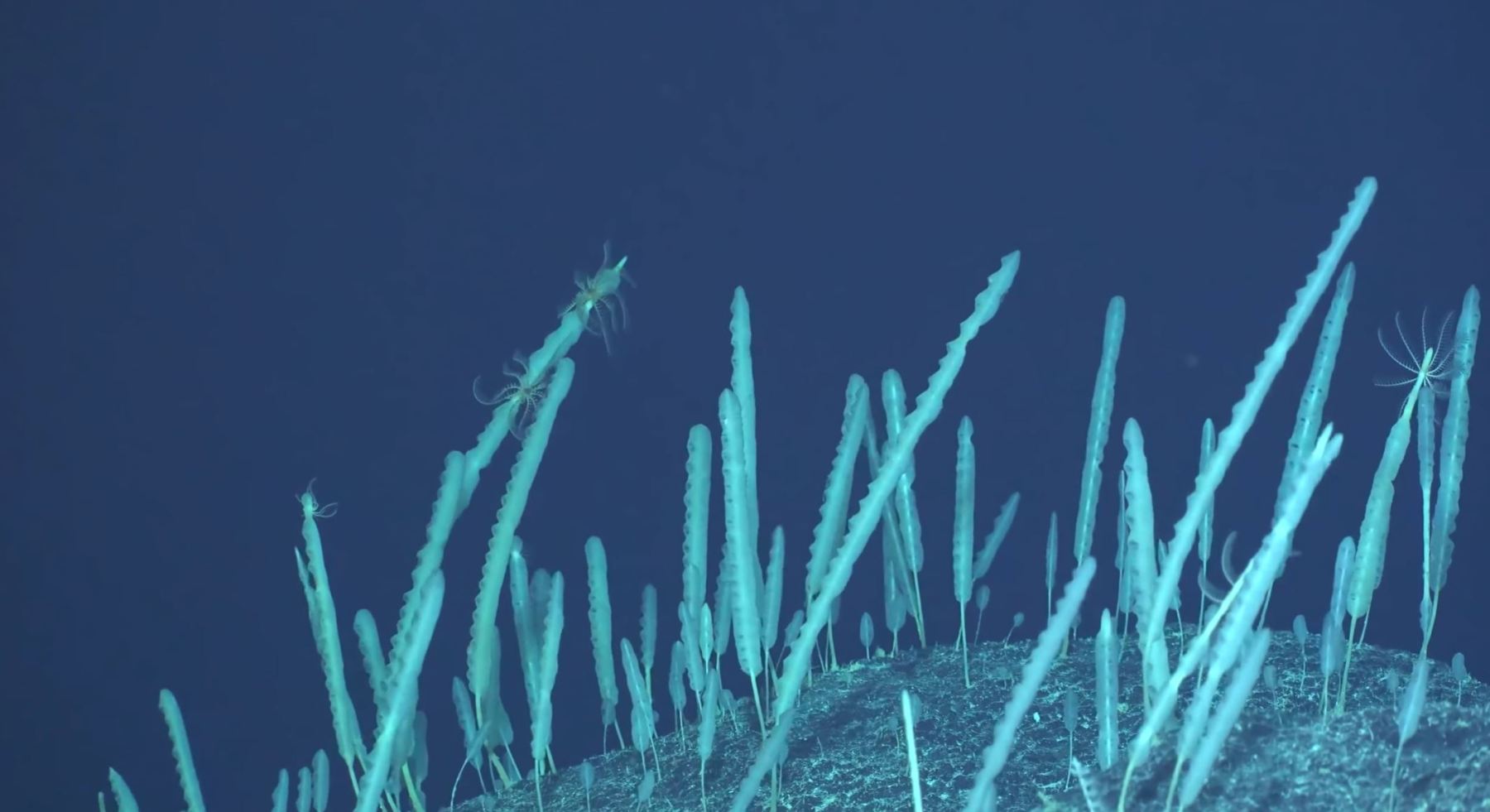
Earth Day is celebrated sometime in April each year since the 1970s and in 2022, it’s Friday 22nd.
Read More

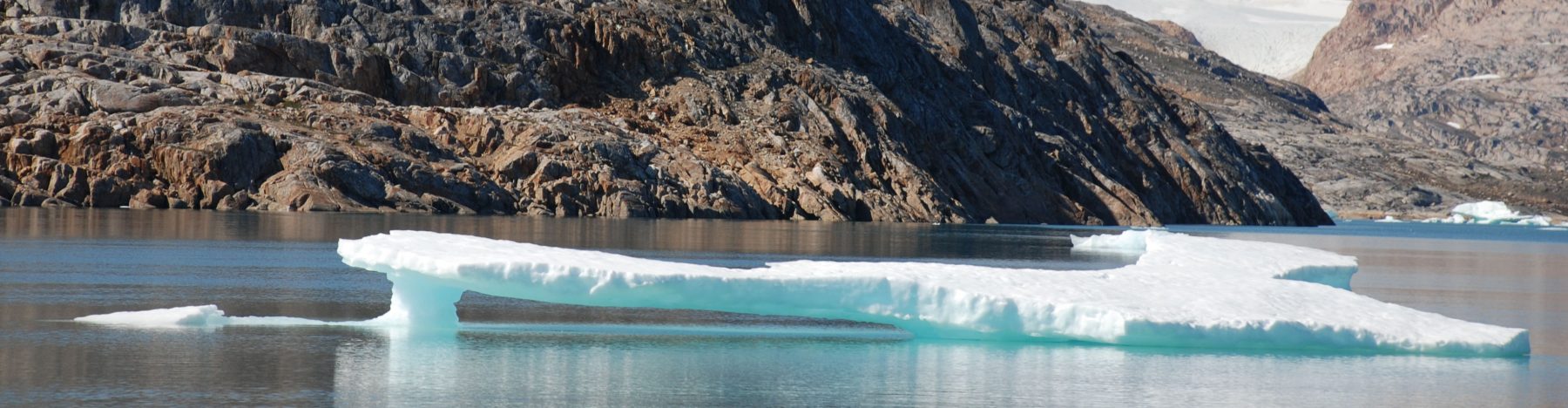
Back in January, Seas Your Future facilitated a fantastic opportunity for six young Scientists in Residence to carry out research project during a 12 day voyage on the Pelican of London along the Pacific Coast of Costa Rica. Here you can find out what they discovered:
Read MoreIt is one thing to be aware of the carbon emissions of online activities (running a website, internet searches, emails, social media, video/music streaming), yet quite another knowing how to reduce it.
Read MoreThe team safely back in Argentina and preparing to go their separate ways to rejoin families and pick up their lives back home, Paul find time for a concluding message.
Read MoreMy work with Seas Your Future gives me the privilege to sail the tall ship Pelican of London with some fabulous people.
Read MoreI have explained the background to the scientific projects we are supporting in a number of blog posts and on our website.
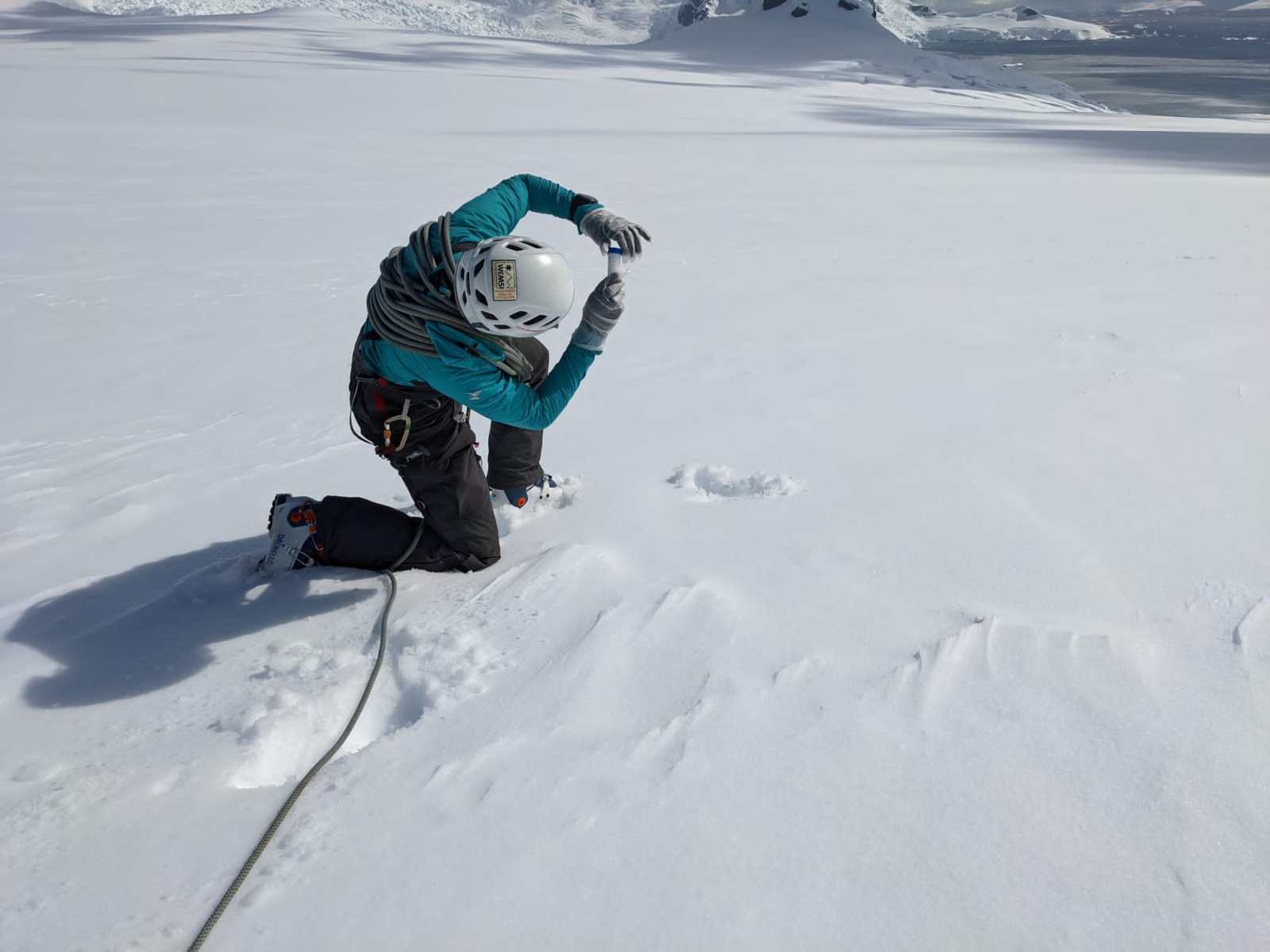
Now I provid an insight into what ‘doing science’ on the ice actually entails, with the example of sampling snow for metal analysis.
Read MoreIt was such fun to do this webinar for school kids from different ages and I was truly astonished what well-considered and pertinent questions I was asked. Well done, all of you!
There was one question I couldn’t answer at the time, but I looked it up after the webinar:
The amount of snow falling on Antarctica has been estimated to be around 2000 Gigatons per year. This is enough to cover the whole of Antarctica in 14 cm of water if it melted (or, as the estimate comes from Belgium, it would cover that country in 66 m of water).
The centre of Antarctica is relatively dry and most of the snow falls on the margins of the continent, in particular in on the Antarctic Peninsula and the West Antarctic Ice Shelf. To put it into a Southwest UK context, in terms of water, the western Antarctic Peninsula receives about as much as Dartmoor (around 2000 – 2500 mm).
So, what is a Gigaton? ‘Giga’ is the prefix for one billion (1 000 000 000 or 109). So, we are talking about 2 x 10¹² tons or 2 x 10¹⁵ kg (1 000 000 000 000 000 kg).
Our six Seas Your Future Scientists in Residence in Costa Rica have sailed the Pacific Coast off Puerto Rico for a few days now.
You might imagine their work to be a breeze, more of a holiday really, sailing tropical seas in great weather… and surely, the sun shines and watching dolphins riding the bow waves amidst bioluminescent plankton at midnight is magical and an experience nobody will ever forget.
Read MoreThe awareness of the carbon footprint of IT and online activity is increasing as a result of media reports, for example thought-provoking articles by the Royal Society, BBC Future and Carbonbrief.org However, ready-to-use carbon footprint calculators, including the widely used Carbonfootprint.com calculator, do not yet include IT, online, social media and video conferencing activities – even though most of us have engaged in much more of this since face-to-face contact has been curtailed by during the covid-19 pandemic of 2020.
Read MoreAs eight explorers turn their backs to the departing ship, they know that for the next six weeks, the team are totally self-reliant.
Read MoreIf you have been travelling abroad at all in the past 12 months, you may be able to imagine the ‘fun’ of getting 8 people from UK, Sweden and the USA to Buenos Aires and from there to Ushuaia – especially in the early weeks of rapidly changing rules in the wake of the emerging Omicron variant of Covid-19.
Read MoreI have the feeling that the Antarctic Quest 21 team just sneaked out of the country before more stringent ‘omicron’-related restrictions made it even more difficult to get this expedition on its way.
Read More





 Challenging Habitat