
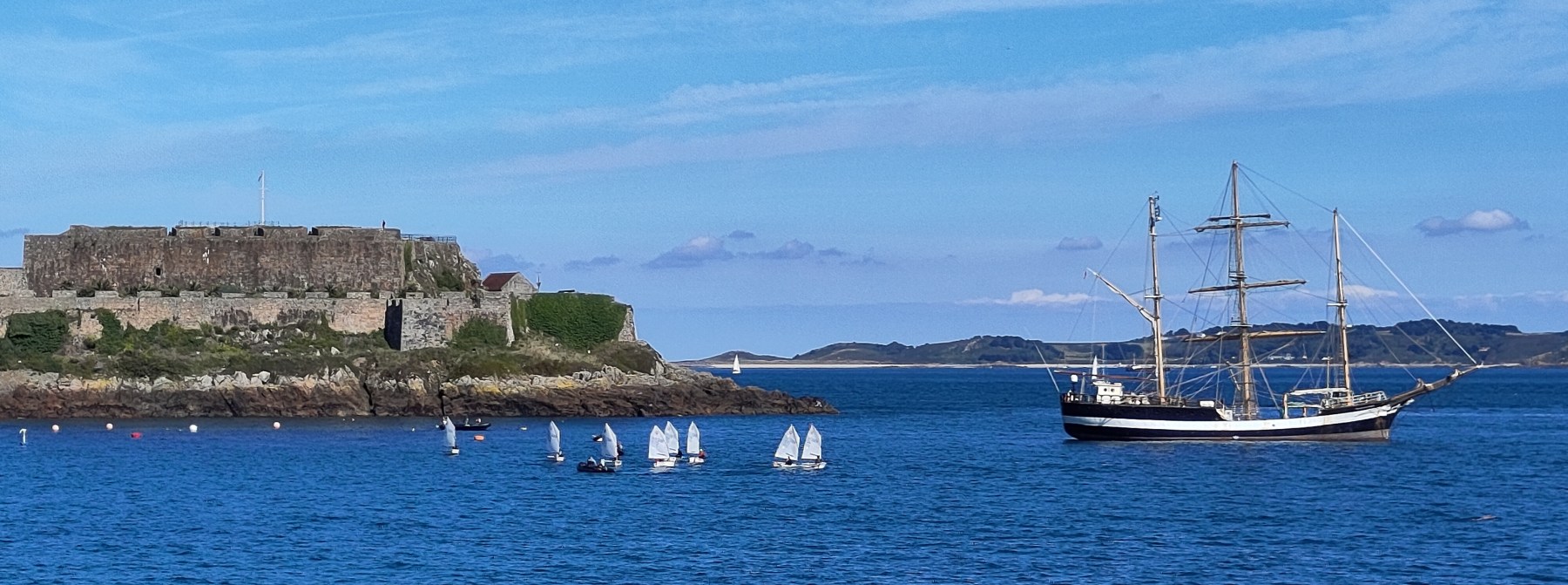
Plankton, fish, water, sand, sediment and bleach: 25 young people from Devon and Cornwall explore the marine system in a beautiful bay off Sark in the Channel Islands.
Read More
Whether it is a ‘landmark win for nature‘, ‘ocean floor mapping‘ or the ‘sex lives of corals‘, there is something for everyone in the Ocean Science Highlights.
Read More
If these are words that chime with you, read on…
Read More
While working on tall ships as scientist, I am always intrigued by the roles of professional crew on board. Here is what I’ve learned about bosuns …
Read More
Sometimes my job involves flying to distant places and for my recent trip to Panama for the sail training charity Seas Your Future, I sought to find out about the fuel consumption and carbon footprint for different routes. I found interesting results worthy of consideration.
Read More
Three hours of blowing bubbles among the coral reefs around Bocas del Toro gave me plenty of time to take in beautiful impressions of a rich ecosystem and questions about its long-term survival.
Read More
In 1922, the British geologist R. L. Sherlock argued that humankind had a major impact on inanimate nature in his work “Man as a Geological Agent”. 101 years later, the Anthropocene Working Group proposed Crawford Lake in Canada as the official site for marking the beginning of a the Anthropocene, a new epoch on the geological time scale.
Read More
I’m on the Dutch tall ship Regina Maris in northwest Panama to work with students and staff of Students without Borders Academy on behalf of Seas Your Future. Yesterday we set sail towards the bay of Blue Fields, where we were welcomed by a mixture of curiosity, entrepreneurship and generosity.
Read More
Science communication can take many formats, from the diaries of explorers, meticulous records of experiments in the field and laboratory, the detailed and highly technical publications in scientific research journals and textbooks, to popular science books, magazines, documentaries and diverse media web content.
Read More
We take young people to the beach to transform…
Read More
Now here is a thought: Fishy breath, trampling and carnage are good things (in the right context).
Read More
Do you want to be an Ocean Advocate and don’t know what to do to achieve this?
Read More Challenging Habitat