Challenging Habitat

Scientist in Residence Mauricio Ferreira spent several weeks on the sail training tall ship Pelican of London and involved teenagers in a plankton research project that compared biodiversity in coastal waters around the Irish Sea. With the right methodology, STEM education is an amazing tool to engage young people, and Mauricio hit the spot!

Read More

The young people who have joined us for one of our Ocean Science or STEAMS voyages on the sail training ship Pelican of London know already that the tiny algae that form the base of the entire ocean food web have several superpowers: they change the chemistry of seawater and regulate our planet’s climate.

Read More

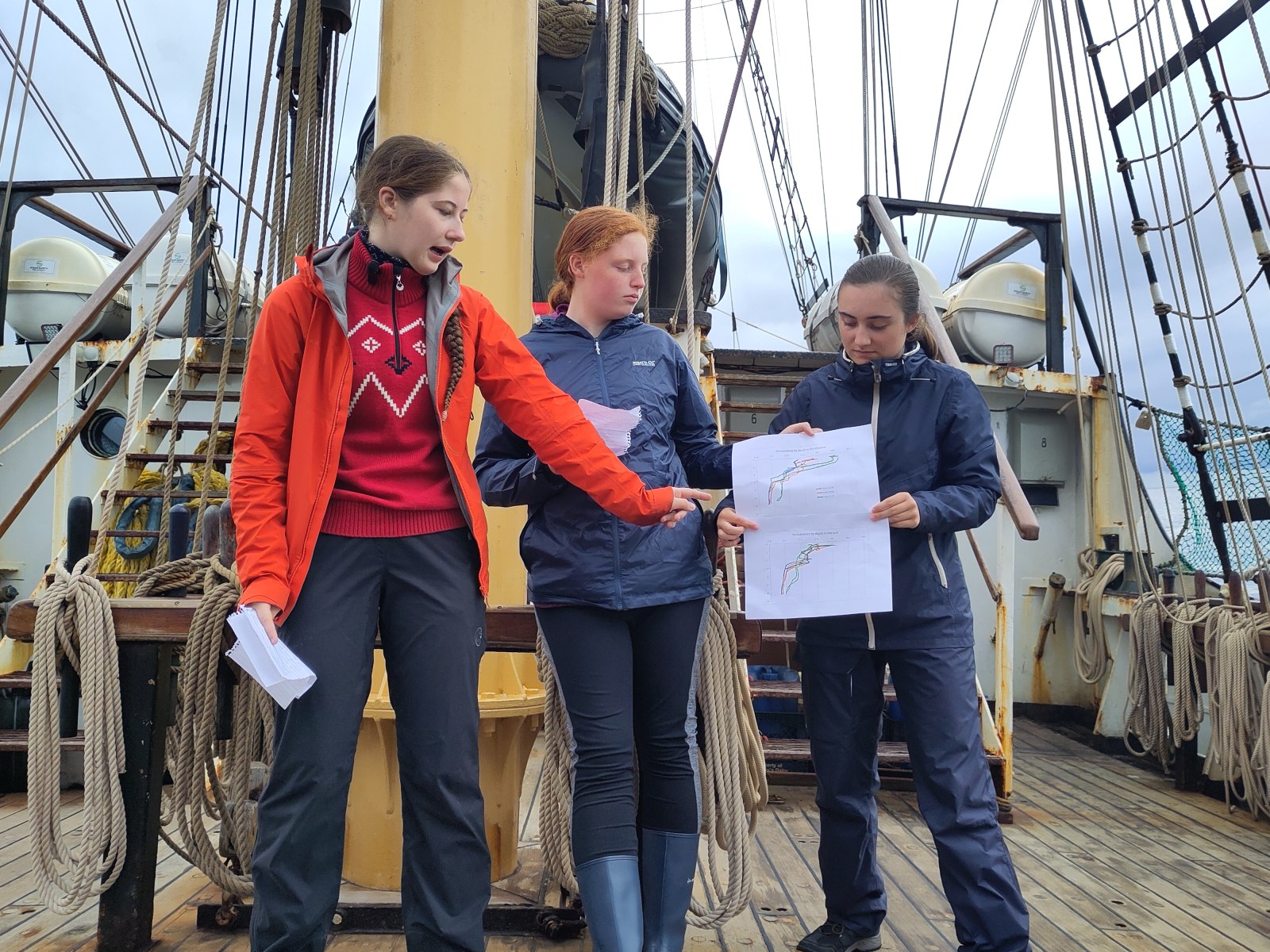
One of the most rewarding aspect of my job on Pelican of London is to sit down with a group of trainees, who just obtained a bunch of data from a scientific instrument, graph it, kick ideas around to make sense of it and place it into a bigger context.

Read More

Megan Farrer is a talented videographer who captured the spirit of our voyage and trainees perfectly on the Plymouth Ocean Science Voyage in nine short videos…

Read More

Plankton, fish, water, sand, sediment and bleach: 25 young people from Devon and Cornwall explore the marine system in a beautiful bay off Sark in the Channel Islands.

Read More

I’ve got a great new ‘toy’ that gets me to explore the world below the sea surface without getting wet. Don’t get me wrong: I like water sports, including snorkelling, but this goes deeper: 150 metres!

Read More

While working on tall ships as scientist, I am always intrigued by the roles of professional crew on board. Here is what I’ve learned about bosuns …

Read More

In 1922, the British geologist R. L. Sherlock argued that humankind had a major impact on inanimate nature in his work “Man as a Geological Agent”. 101 years later, the Anthropocene Working Group proposed Crawford Lake in Canada as the official site for marking the beginning of a the Anthropocene, a new epoch on the geological time scale.

Read More

Science communication can take many formats, from the diaries of explorers, meticulous records of experiments in the field and laboratory, the detailed and highly technical publications in scientific research journals and textbooks, to popular science books, magazines, documentaries and diverse media web content.

Read More

Last year, Olivia Yorke-Dunne was our youngest ever Scientist in Residence on the sail training tall ship Pelican of London. This year, she’s been back.

Read More