
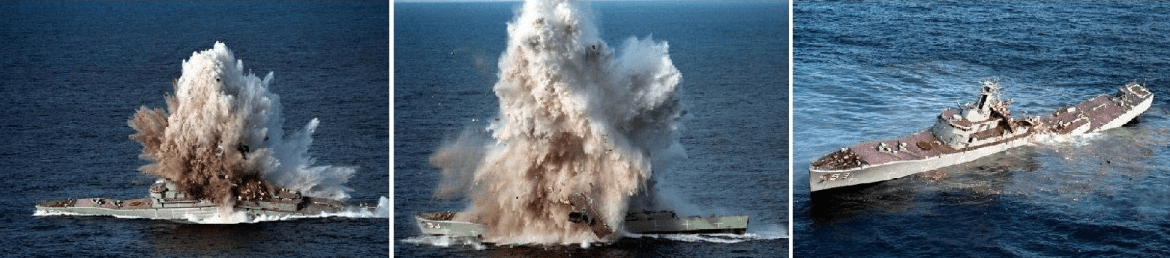
It should be obvious that ammunition and mines are single-use and for this reason alone, not a sustainable use of resources – just as single-use plastics, and aren’t most of us objecting to those publicly by now?
The body of scientific evidence on the environmental impacts of war is increasing. Since the start of the Russia-Ukraine war, past and ongoing conflicts are subjected to more intense impact evaluation beyond the harm caused to people, culture and societies.
Armed conflict affects the environment through direct and indirect pathways that extend well beyond the immediate area and duration of hostilities. Modern warfare and military activities show negative impacts on biodiversity and ecosystem functioning that are driven by:
- habitat degradation or destruction, including direct damage and chronic disturbance to terrestrial and aquatic systems,
- short- and long-term contamination from weapons and ammunition,
- contamination resulting from damage to civil, industrial and military infrastructure,
- noise pollution on land and at sea (explosions, heavy machinery, planes, ships, sonar, etc.),
- direct and indirect greenhouse gas emissions (fuel usage, resource extraction for military
equipment and infrastructure), - indirect damage to and contamination of the natural environment through the development, manufacturing and testing of munitions and delivery systems and the accelerated depletion of neccesary resources.
In this context, armed conflict can be understood as a major indirect driver of biodiversity loss that operates through the same processes identified generically as causes: change of land-use and sea-use, pollution, climate stress, over-exploitation, and spread of invasive species. These drivers of biodiversity loss and ecosystem damage are amplified by war. In addition, war often weakens governance, displaces populations, destroys natural habitats and agro-ecosystems and generates spillover effects that propagate environmental degradation far from active combat zones.
The severity of these outcomes stands in stark contrast to their routine exclusion from environmental accountancy, and their likeyhood to be drowned by news of human suffering and economic detriment caused by war. And of course, they are closely interrelated in the short- and long-term.
Recently, the patterns of ecological war damage have been framed through the concept of ‘ecocide’, recognising the gaps in accountability and the difficulty of enforcing environmental protection during war. This perspective reinforces the need for systematic post-conflict environmental rehabilitation, such as ecosystem restoration and rebuilding environmental institutions, as a foundation for durable recovery.
My interest in the ocean causes me to look more closely at recently reported, specific impacts of war on the marine environment:
- Oil spills and hydrocarbon pollution from military action can cause long-term damage to biota
in sediments, coral reefs and mangroves, with effects on the marine food web akin to mayor civilian oil spills at sea. Yet a bombarded oilfield or refinery is rarely headline news for long, although evidence from the Persian Gulf War of 1991 documents long-term chronic effects. - Unexploded ordnance, naval mines, wrecked ships, damaged oil platforms and dumped munitions on the seabed remain hazardous for decades and over time, release toxic substances (heavy metals, propellants, explosives) into marine sediments and waters. As evidence from the conflict in Ukraine emerges, the threats to fisheries and marine protected areas are of growing concern.
- Dredging for military infrastructure, ship groundings, the bombardment of ports and explosions during warfare cause direct physical damage to marine habitats, most notably affecting coral reefs, seagrass beds, mangrove and soft-sediment habitats. The consequences cascade through the ecosystem, as important nurseries for fish and invertebrates, natural buffers against erosion and natural filters of land-derived pollution are damaged.
- The acoustic pollution from naval sonar (especially mid-frequency active sonar) and explosions have been linked to mass strandings of cetaceans through disruption, stress and physiological injury, such as ear drum damage and decompression-related injury in whales.
- The toxic remnants of warfare at sea, such as heavy metals, radioactive materials, industrial chemicals and petroleum derivatives, have been shown to bioaccumulate in the marine food web, affecting fish, marine mammals and human consumers.
- Waste materials from ammunition, crashed planes and drones and wrecked ships, as well as waste dumped at sea during warfare, contain plastics, metals, paint, ropes, lubricants and man-made compounds that, whether inert or toxic, can cause biological damage through ingestion, entanglement and exposure.
In spite of all these threats, the ocean may play a unifying role, as throughout the decades, ocean science often fostered cooperation, trust, and shared stewardship of marine resources in politically sensitive contexts.
It has been argued that sustainability science may become a potential tool for conflict prevention. In this context, the United Nations Decade of Ocean Science for Sustainable Development was highlighted as a missed opportunity by failing to explicitly include peace and security in its outcomes. A formal eighth outcome ‘A Peaceful Ocean’ has been proposed to be added to the Ocean Decade framework, positioning international scientific cooperation not only as a response to environmental crises, but as a proactive mechanism to reduce conflict risk in increasingly crowded and contested ocean spaces.
War is a driver of intense environmental degradation and a barrier to sustainable society. On the other hand, strategically designed environmental science and governance initiatives based on the four pillars of sustainability (environmental, social, economic and cultural) have the potential to break cycles of environmental stress,
institutional fragility and conflict.
Sources:
Aung Ye Kyew. 2024. Environmental Challenges of Shipwreck Removal: A MARPOL Perspective. In Collaborate: Engineering Daily Vol 2 No 2. Raising Awareness of Marine Pollution and the Role of MARPOL in the Maritime Community
Blasiak et al. 2023. The Ocean Decade as an instrument of peace. Current Opinion in Environmental
Sustainability. https://doi.org/10.1016/j.cosust.2023.101319.
European Commission. 2026. Science for Policy Brief: Titanium metal: Impact assessment for supply security. The European Commission’s science and knowledge service. https://rmis.jrc.ec.europa.eu/uploads/220616_Briefing_Titanium.pdf.
Graham. 2024. Turning the Tide on Remnants of War at Sea? Toward the Principles for Protection of
the Environment in Relation to Armed Conflicts. The International Journal of Marine and Coastal Law.
https://brill.com/view/journals/estu/39/4/article-p768_6.xml?ebody=pdf-130820.
Hicks et al. 2026. Carbon accounting: review and case study on the development of a carbon baseline
for military infrastructure. Renewable and Sustainable Energy Reviews.
https://doi.org/10.1016/j.rser.2025.116511.
Krampe et al. 2026. Armed conflict causes long-lasting environmental harms. Environment and
Security. https://doi.org/10.1177/27538796251323739.
Lawrence et al. 2015. The effects of modern war and military activities on biodiversity and the
environment. NRC Research Press. http://dx.doi.org/10.1139/er-2015-0039.
Pandi-Perumal & Saravanan. 2026. Marine life is a silent casualty of armed conflicts. Nature
Correspondence. https://doi.org/10.1038/d41586-026-00942-w.
Parsons. 2017. Impacts of Navy Sonar on Whales and Dolphins: Now beyond a Smoking Gun?
Frontiers in Marine Science. https://doi.org/10.3389/fmars.2017.00295.
Rist et al. 2025. Biodiversity, peace and conflict: understanding the connections. Current Opinion in
Environmental Sustainability. https://doi.org/10.1016/j.cosust.2024.101431.
Rogowska and Namiesnik. 2012. Environmental risk assessment of WWII shipwreck pollution. Chapter In: Sharma and Sanghi: Wastewater Reuse and Management (pp 461-478). Springer Nature Link. https://doi.org/10.1007/978-94-007-4942-9.
Wirtu & Abdela. 2025. Impact of war on the environment: ecocide. Frontiers in Environmental
Science. https://doi.org/10.3389/fenvs.2025.1539520.
Featured Image: Torpedo attack on warship. CC0 Public Domain

