
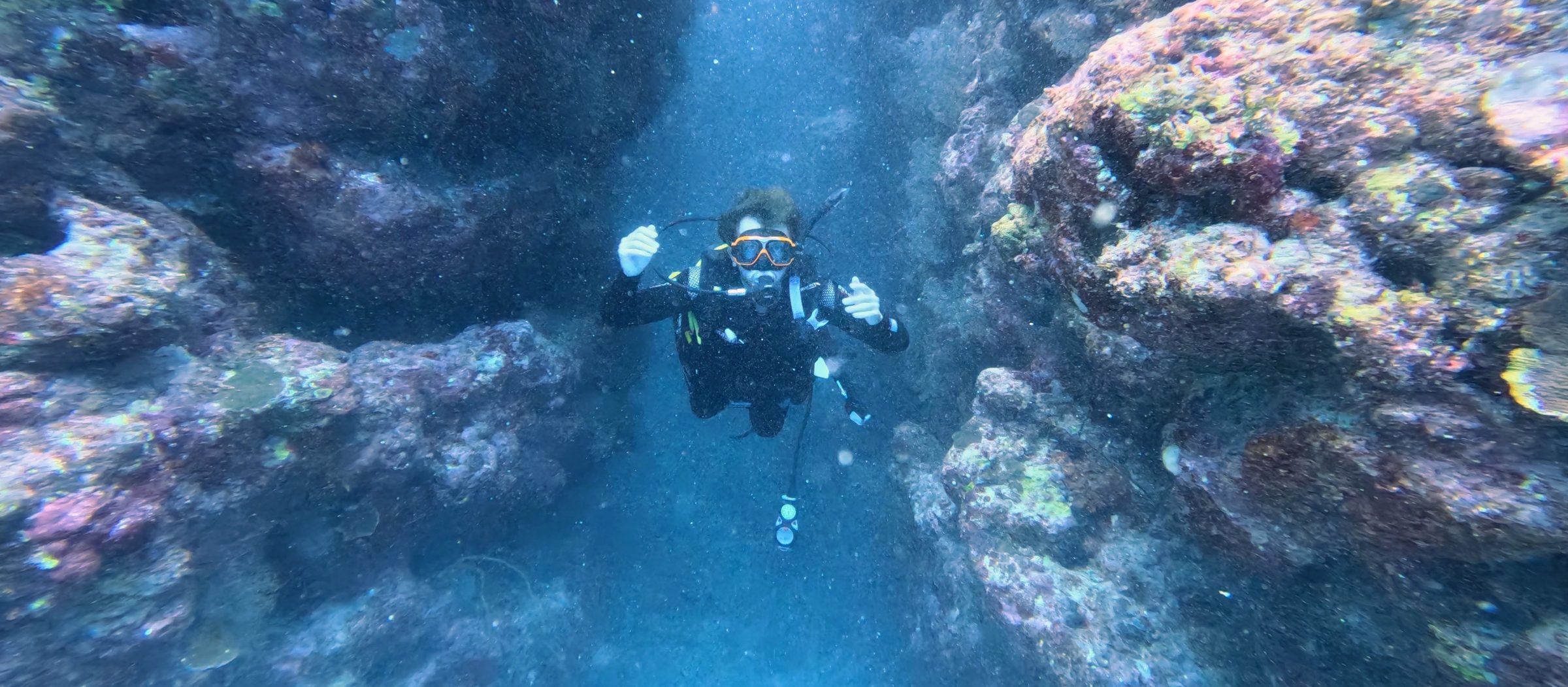
Mauricio is one of those multi-talented young people who just excel at whatever they do – whether that’s coaching children on Capoeira skills, analytical chemistry, working as corporate receptionist or marine biology! He has volunteered as Scientist in Residence on the sail training tall ship Pelican of London and has become one of her ambassadors.
Here, Mauricio writes a guest blog for Challenging Habitat that showcases two separate worlds of science communication: with fellow scientists and with the public. The latter is becoming increasingly important as much of what scientists do is funded by the public purse – i.e. you and me – and taxpayers have a right to know how their money is spent.
So, whoever you are, I invite you to dive into Mau’s world of marine biology – case study Australia’s Super Corals!
1. A Science Story in Plain English
The World of Corals and Their Superheroes
Corals, the beautiful, colourful animals (yes, corals are animals!) that, due to climate change, we have heard so much about in the past decades now have a new hope: their superheroes – also called super corals. Corals have been around for 500 million years, but the warming of the oceans, together with other changes, has been challenging their survival. Being sensitive to small water temperature changes, many coral communities have been passing through bleaching events, in which the corals expel the tiny algae that live inside them, making them lose their colour. Crucial for their survival, without these algae, corals tend to die, making a huge impact on the whole ecosystem that depends on corals to survive, either by feeding or by using corals as their homes.
For this reason, many scientists have spent years trying to find solutions to make corals more resistant, and that is where super corals come into the conversation. It is still a new idea that has a more popular concept than a scientific one. It seems that those corals with “superpowers” can resist higher temperatures than common individuals, giving hope to save this beautiful underwater world. But just like every superhero has different powers, different super corals have different ways to deal with high temperatures.
Long time versus short time power
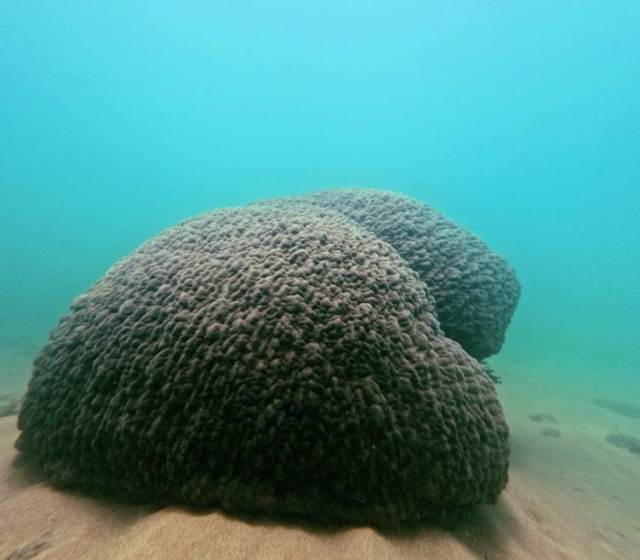
Some studies have observed that some species can “adapt” to the slow increase in temperature over decades, while others would not resist that warming but can deal well with a peak of high temperature for a few days. Corals that are called “massive corals”, especially from the genus Porites, fit into the first scenario; they do not seem to be much bothered by the constant but slow warming.
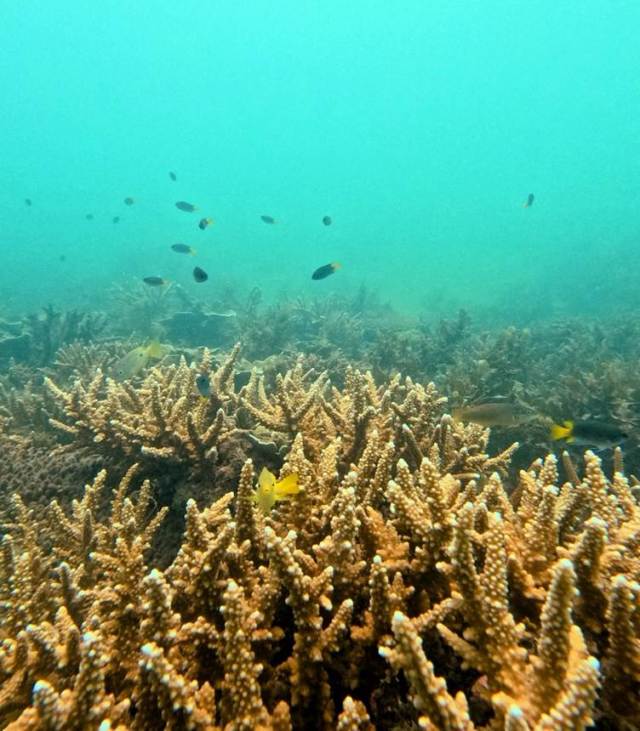
Other species from the genus Acropora are not able to adapt to the constant increase in temperature but can survive short episodes of high temperature. For that reason, they have also been found thriving in some macrotidal environments, where the tide changes a lot, bringing hot surface water into contact with them and creating extreme temperature changes during the day. Some species even show a 21% increase in growth in those environments compared to places where the water temperature increases slowly over a long period. Scientists are investigating whether the cold period allows them to recover from the warm period.
Super moms
Some scientists have also found that tolerance to hotter water temperatures can be a superpower obtained from their mums. As a rule, animal babies obtain their mitochondria from their mum – famously known as the powerhouse of the cell – and it seems that mitochondria play a big part in temperature resistance. Studies show that if the coral mother comes from a warm-water area, the coral babies have approximately 66% higher chances of survival. This shows resistance at an individual level, as not all corals from the same species would have those genes.
There have been discussions about whether we should make efforts to find these corals with a “super mitochondria” gene and spread them around; however, this can create risks for coral communities. If most corals have a similar gene, that also means they have similar resistance to diseases, which can cause a disease outbreak, killing many individuals.
Super friends
As mentioned, corals have tiny algae friends that live inside them, whose photosynthesis creates the food that corals need. As they are already inside the corals, this makes them easy to feed, and with that, both corals and tiny algae thrive. There are different types of these tiny algae, some of them called clade D and clade C. It has been observed that corals in warmer regions have a preference for algae from clade D instead of clade C, with up to around 85% of their algae belonging to clade D. This could mean that they are also more resistant to warm temperatures. But this beautiful relationship between corals and algae is still poorly understood, and the reasons why one coral will choose a specific alga are unknown.
Overall, super corals are still a very young idea with many meanings behind it, but they create hope for maintaining this wonderful underwater ecosystem that we all love to see and that provides so much for many other animals, whilst we try to mitigate the climate crisis we are facing nowadays.
2. Science Communication between Scientists
“Super corals”, while not a scientific term but rather a popular one, have been increasingly mentioned in recent years as a potential solution to help save coral reefs. This concept refers to the implementation or protection of coral individuals that are able to withstand the challenging environmental changes that have occurred over the past decades. Among the multiple stressors affecting corals, elevated seawater temperature is the most concerning, as it can trigger bleaching events, which have been occurring with increasing frequency. For this reason, research has mainly focused on corals that are resistant to high temperatures. However, different species can acquire this resistance through different mechanisms, leading to a broad and sometimes unclear definition of what constitutes a “super coral”.
Studies indicate that different coral species exhibit varying resistance to gradual warming compared to short episodes of extreme temperature. Some research suggests that resistance to chronic thermal stress may be related to acclimatisation, which can be observed in massive corals such as some species from the genus Porites. Other species cope better with short-term temperature extremes but show lower resistance in the long term. This pattern is observed in some species of the genus Acropora, which thrive in macrotidal environments and mangrove habitats and are adapted to extreme daily temperature fluctuations. Some of these species show up to a 21% increase in calcification when exposed to oscillating temperatures (acute disturbances) compared to a constant temperature increase (chronic disturbances).
Further research is needed to understand how different species respond to these two types of thermal stress. It appears that some corals develop resistance under slow but continuous temperature increases, while others require temperature oscillations, possibly allowing recovery during cooler periods. In some cases, resistance is observed at the species level, suggesting broad adaptive traits. However, this is not universal, as certain species display population-level differences in thermal resistance, influenced by genetic variation within the gene pool.
There is evidence that coral heat tolerance is influenced by mitochondrial function and mitochondrial–nuclear interactions. This suggests that corals inheriting specific mitochondrial genomes may be more or less susceptible to heat stress. Corals, unlike most animals, have shown indications of paternal mitochondrial DNA (mtDNA) not being entirely eliminated after fertilisation, although not common. Nevertheless, studies demonstrate that mtDNA inherited from the dam (mother) accounts for approximately 66% of the variance in larval survival, while mtDNA from the sire (father) explains only around 11%.
In this context, the origin of the dam is more influential than that of the sire. Larval survival has been shown to increase up to five-fold when dams originate from warmer locations, such as Princess Charlotte Bay, compared to cooler locations like Orpheus Island. This suggests that active human intervention aimed at spreading heat-tolerant genes from warmer regions could enhance coral survival in cooler areas that may experience future heat stress.
However, reduced genetic diversity may pose long-term risks to coral communities. Limited gene flow can increase vulnerability to disease outbreaks, as low genetic variability may facilitate community-wide collapse when exposed to novel pathogens.
Other studies highlight the importance of endosymbiont clade composition in coral heat tolerance. For example, endosymbionts from clade D are generally more thermally tolerant than those from clade C, and this resistance can reduce the likelihood of bleaching, benefiting both the coral host and the symbiont. Although corals often host a mixture of symbiont clades, clade D dominates more than 85% of coral populations in warmer regions. Despite this, symbiont transmission remains poorly understood, and the successful introduction of a specific clade into natural coral communities is still uncertain, as corals may actively reject incompatible symbionts.
Ultimately, it remains unclear what precisely defines a heat-resistant coral, as multiple interacting factors influence thermal tolerance. However, the combination of favourable genetic traits, appropriate endosymbiont clades, and effective acclimatisation may justify the classification of an individual as a “super coral”. Substantial research is still required before such a label can be confidently applied. Nevertheless, identifying resilient individuals across multiple species provides hope, alongside broader efforts to mitigate ongoing climate change.
3. The all important References for all audiences
Grottoli, A.G., Tchernov, D. and Winters, G. (2017) “Physiological and Biogeochemical Responses of Super-Corals to Thermal Stress from the Northern Gulf of Aqaba, Red Sea”, Frontiers in Marine Science, 4.
Dixon, G.B., Davies, S.W., Aglyamova, G.A., Meyer, E., Bay, L.K. and Matz, M.V. (2015) “Genomic determinants of coral heat tolerance across latitudes”, Science, 348(6242), pp. 1460–1462.
Bay, R.A. and Palumbi, S.R. (2014) “Multilocus adaptation associated with heat resistance in reef-building corals”, Current biology: CB, 24(24), pp. 2952–6.
Humanes, A., Lachs, L., Beauchamp, E., Bukurou, L., Buzzoni, D., Bythell, J., Craggs, J.R.K., Cerro, R.D.L.T., Edwards, A.J., Golbuu, Y., Martinez, H.M., Palmowski, P., Steeg, E.V.D., Sweet, M., Ward, A., Wilson, A.J. and Guest, J.R. (2024) “Selective breeding enhances coral heat tolerance to marine heatwaves”, Nature communications, 15(1), p. 8703. Available at: https://doi.org/10.1038/s41467-024-52895-1.
Barshis, D.J., Ladner, J.T., Oliver, T.A., Seneca, F.O., Traylor-Knowless, N. and Palumbi, S.R. (2013) “Genomic basis for coral resilience to climate change”, Proceedings of the National Academy of Sciences of the United States of America, 110(4), pp. 1387–92.
Camp, E.F., Schoepft, V., Mumby, P.J., Hardtke, L.A., Rodolfo-Metalpa, R., Smith, D.J. and Suggett, D.J. (2018) “The Future of Coral Reefs Subject to Rapid Climate Change: Lessons from Natural Extreme Environments”, Frontiers in Marine Science, 5.
Quigley, K.M. (2024) “Breeding and Selecting Corals Resilient to Global Warming”, Annual review of animal biosciences, 12, pp. 209–332.
Camp, E.F., Schoepf, V. and Suggett, D.J. (2018) “How can “Super Corals” facilitate global coral reef survival under rapid environmental and climatic change?”, Global Change Biology, 24(7), pp. 2755–2757.
4. About Mauricio
Mauricio has a wide range of experience, from working at a school, pharmacy and as quality control chemist in Brazil to being a corporate receptionist and volunteering with the Capoeira Club and NHS in London and on TS Pelican of London as Scientist in Residence.
Since 2023, he reads for the MSci Marine Biology with Oceanography at the University of Southampton. He went to Australia for a one-semester study abroad programme at James Cook University, located in Townsville, QLD. About this time, he writes:

“For a little over five months, I had the opportunity to take modules focused on coral reefs, assist with research projects, and completed many dives around the Great Barrier Reef. This allowed me to see many different states of coral reefs: I saw areas that were completely destroyed, others that were recovering, and some that were completely healthy.”
You can get in touch with Maurcio: mauriciofe01@gmail.com
 Challenging Habitat