
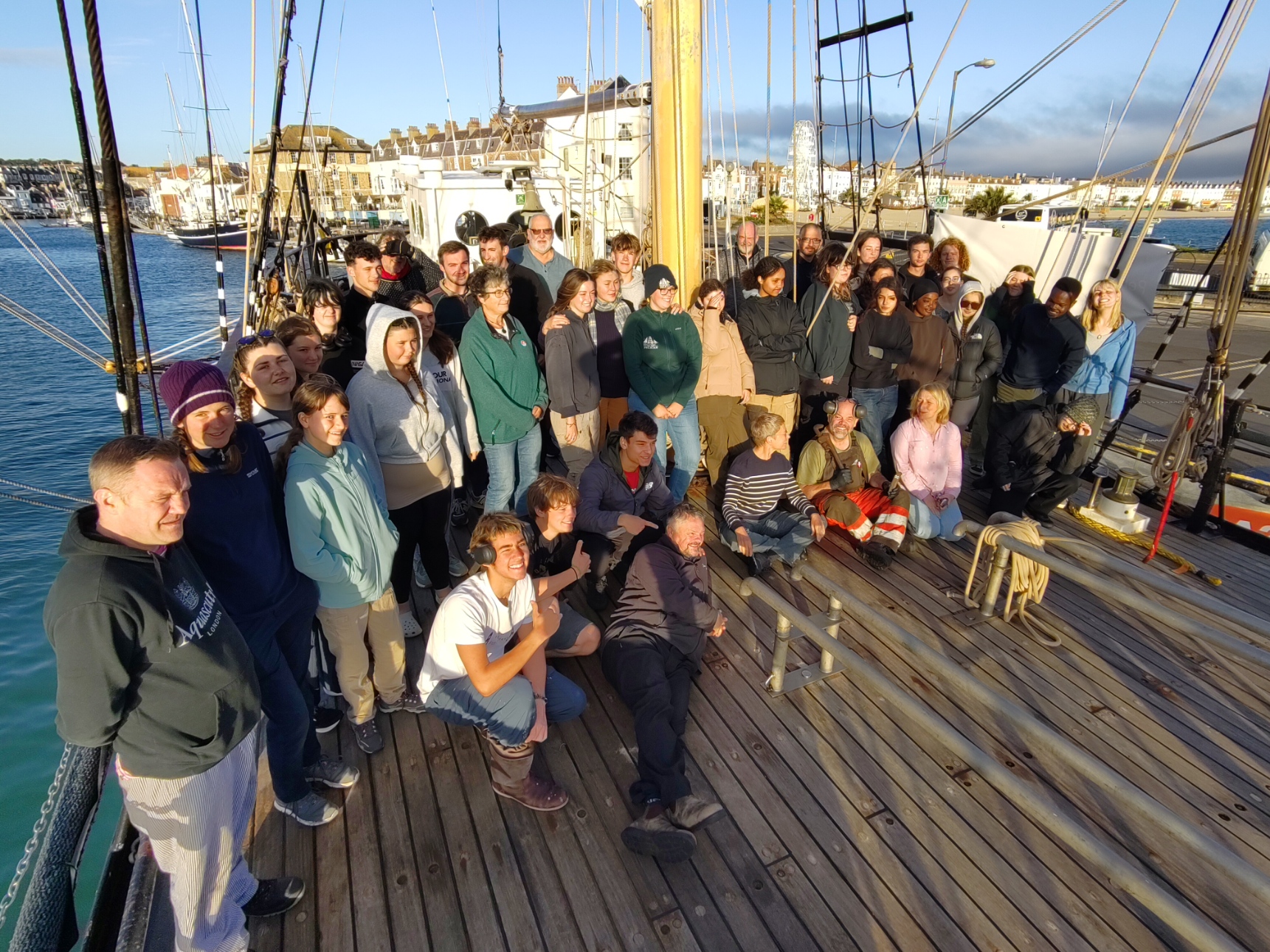
Let’s spell it out: cleaning communal toilets, sharing a dormitory with strangers, travel sickness, washing up for 46 people and standing in the wind and rain for hours on end are not common entries on people’s lists of favourite activities.
Yet 27 young people chose to do just that for a chance to live on ‘planet Pelican‘ for a while and experience all the good stuff that comes with it…
Chief mate Simon uses the planet Pelican metaphor in his ‘living aboard’ talk as part of the welcoming routine for trainees and volunteers joining the sail training tall ship Pelican of London for the first time.
It is befitting: at sea, we depend on each other, on the effectiveness of our communication and team work, on the working order of the ship and on the resources we have on board. Just as on planet Earth, our wellbeing and survival depends on our maintaining a healthy and functioning environment on Pelican:
- we are supportive, inclusive, respectful and appreciate each other’s talents and contributions
- we have a common purpose and work together to arrive safely at our destinations
- we take collective responsibility for the maintainance of a healthy environment and functioning systems
- we share our limited resources equitably
- we meet challenging and changing circumstances with resourceful problem solving, flexibility and resilience.
Of course, planet Pelican is not the perfect utopia portrayed in the above list, but its values are evident in the interactions between crew and volunteers, and naturally, they also permeate the training and guidance we deliver on board and increasingly, these values take hold among trainees over the course of each voyage.
For many, the excitement of coming on board is mixed with some trepidation, and at first, it takes a little courage to overcome social awkwardness, confined spaces and the unknown of the first hours on board. But soon, watch teams are formed, briefings delivered, beds are made, luggage stowed and the chatter among the new trainee crew becomes more relaxed as they settle into their ‘home’ for the next ten days.
Leaving harbour the next day and planet Pelican starts to feel like a community: the new challenges of handling mooring lines, helming ship, setting sail and climbing the rigging take teamwork and some guts, but are not easily accomplished while those same guts are turning themselves inside-out with seasickness. This is where mutual support and looking out for each other comes in.
Rewards are plentiful: we watch and record the dolphins riding alongside the ship, tuna hunting fish in Start Bay, a multitude of sea birds – most spectacularly gannets darting into the water from a dizzy height with an audible splash. Clare Riley, one of our watch leaders wrote a beautifully illustrated blog post about the voyage.
The weather is not always with sailors and as our voyage plans change repeatedly, we gain the first glimpse of our trainee’s flexibility and ease of dealing with disappointment, a resilience which is tested again when technical issues dash our hopes for an overnight sail back to Plymouth. Instead of mutiny, trainees make the best of their time on board, may that be through engagement with the activities crew rustles up at short notice, making stacks of pancakes for breakfast or helping the engineers with cleaning cooling water pipes blocked by biofouling, a problem increasingly encountered during marine heatwaves. The Planet Pelican Team at its best!
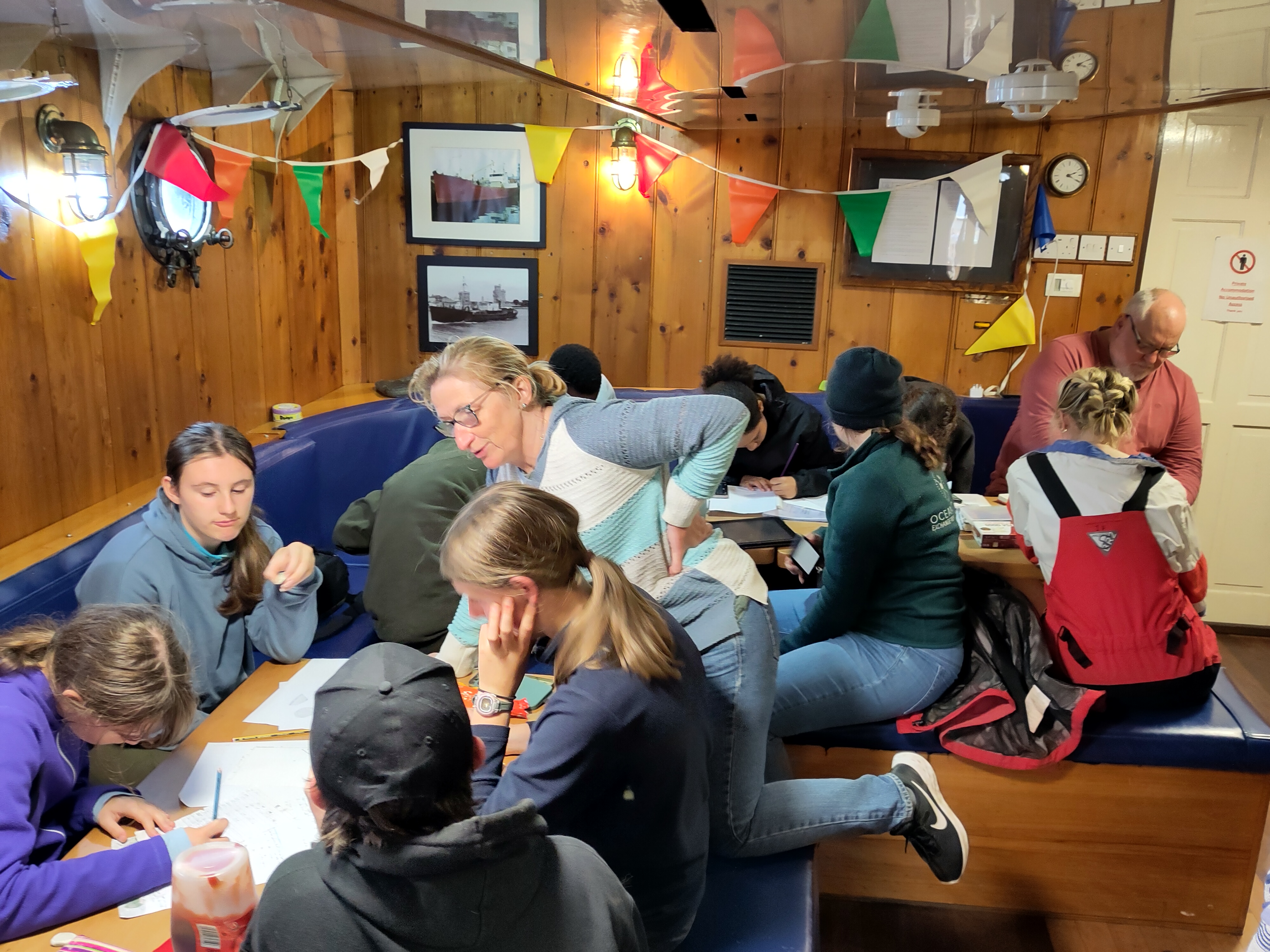

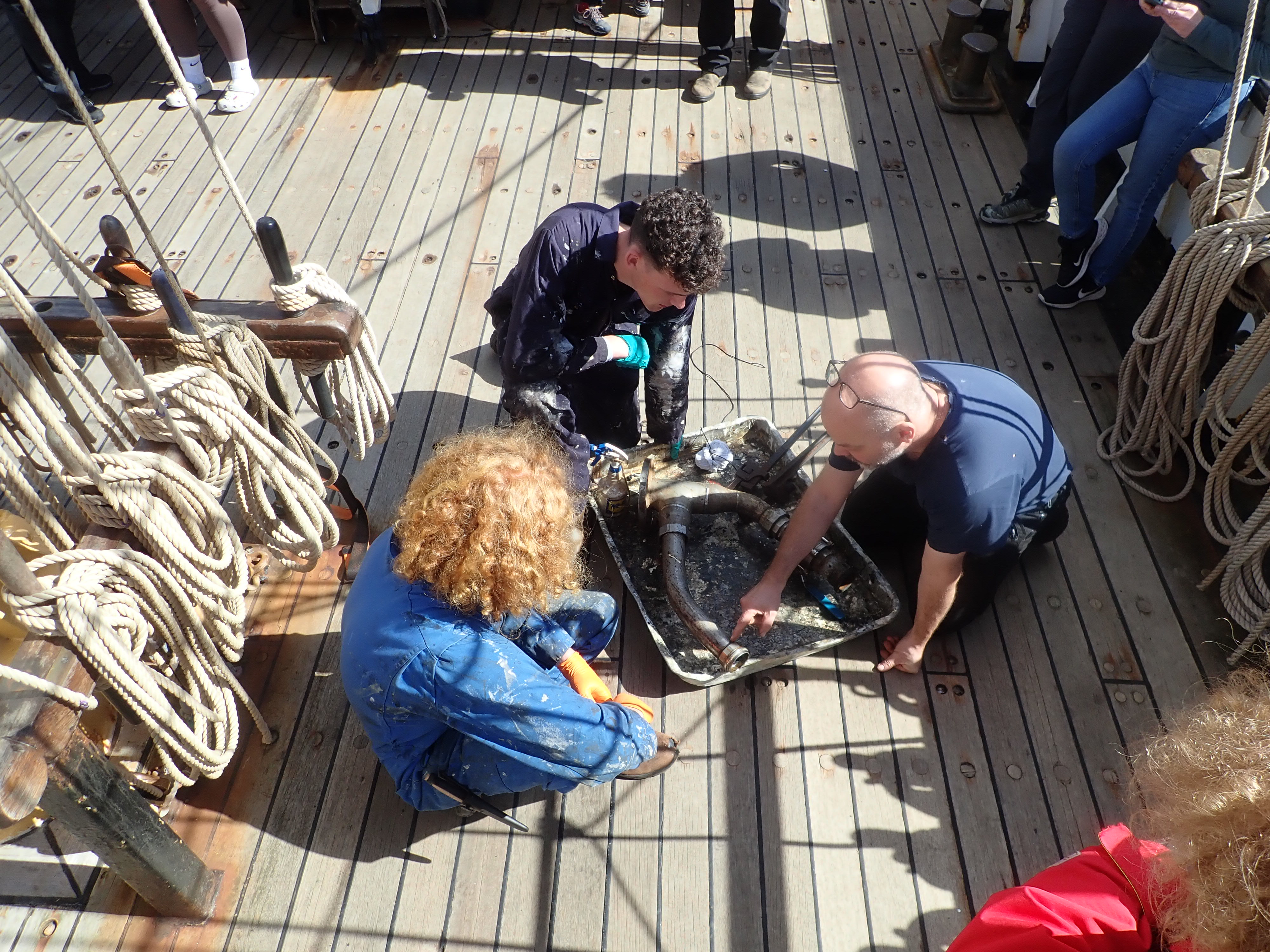
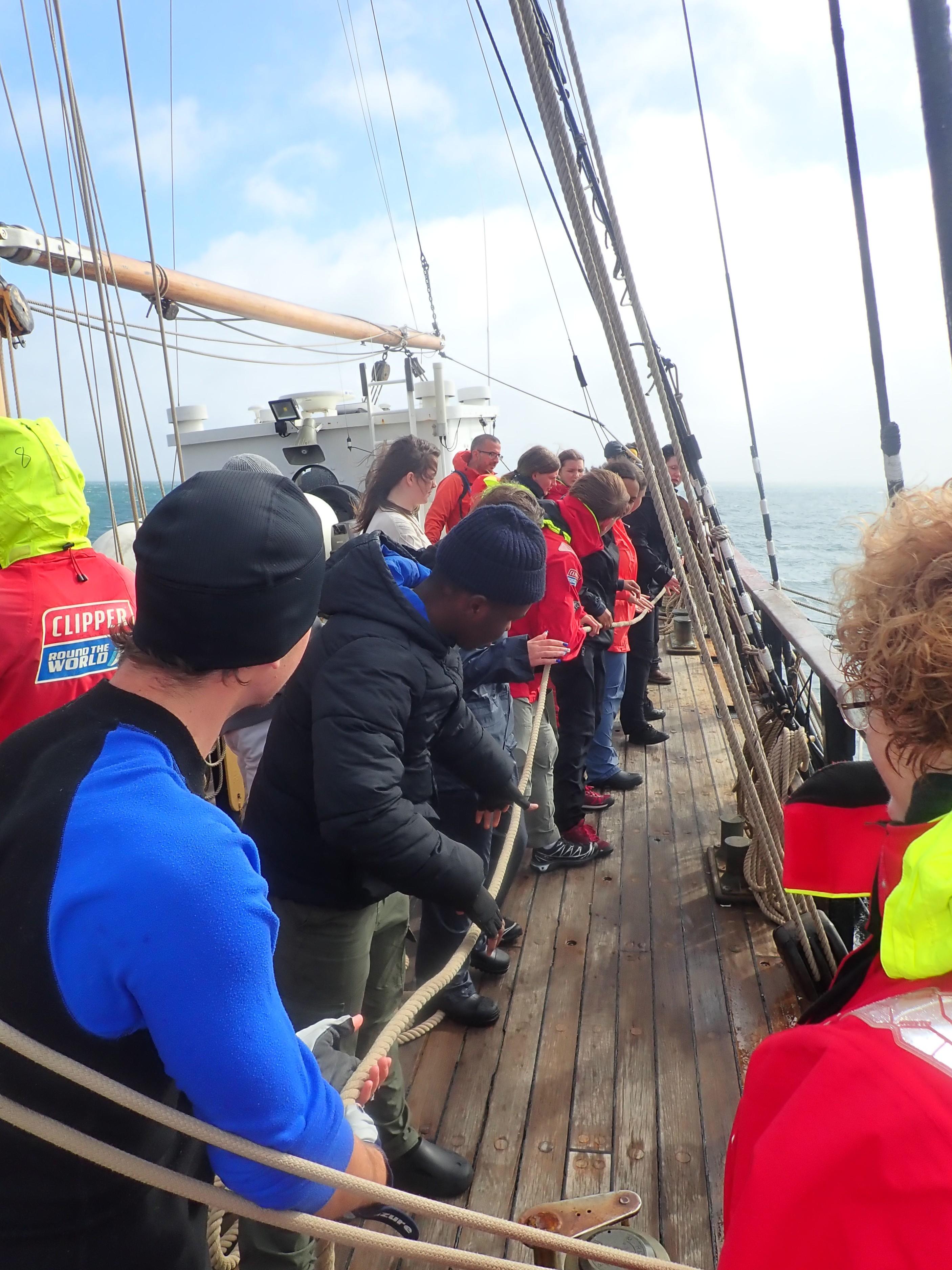
The determination, team spirit, courage, confidence and resilience, the young people on board practice and develop, are important professional attributes and key in dealing with the uncertainties life presents – not least the environmental changes we are facing as a result of our greenhouse gas emissions (see my recent post Tipping Points).
This is why we also integrate the exploration of scientific concepts into our sail training experiences: discovering and starting to understand some of the ocean system while at sea, our trainees experience the power of data, evidence-based reasoning and clear communication as tools in dealing effectively with change and uncertainty.
Perhaps, for some, this voyage is a stepping stone for leading the change in personal behaviour, society and governance that is necessary to maintain a healthy, functioning ecosystem on planet Earth…There is evidence that spending time on Pelican of London for sail training and ocean science has a positive effect on Ocean Literacy1, Marine Identity2 and Marine Citizenship3.
- EMSEA: Ocean Literacy – “An ocean literate society understands the impact that individuals and the collective have on the ocean and in turn, its impact on our lives and well-being. … ocean literacy is a fundamental means to enhance ocean knowledge, build connections in people’s lives and support and encourage citizens and stakeholders to act in a positive way for our Ocean. Ocean literacy is a way to advance sustainable practices, develop policy, promote responsible citizenship and encourage young people to be involved in the future.” online https://www.emseanet.eu/what-ocean-literacy.
Marine Conservation Society: The 10 elements of Ocean Literacty are: “knowledge, awareness, attitude, behaviour, activism, communication, emotional connection, access and experience, adaptive capacity, trust and transparency”. online https://www.mcsuk.org/ocean-emergency/people-and-the-sea/hyym/ocean-literacy/ ↩︎ - Buchan PM et al: Marine Identity – “an identity rooted in how the ocean as a place supports the sense of self” online https://relationalthinkingblog.com/2024/08/21/plain-language-summary-what-is-marine-identity/ ↩︎
- Buchan PM et al: “Marine Citizenship – people exercising their right to be involved in marine decision-making and taking responsibility for the ocean” online https://relationalthinkingblog.com/2024/08/21/plain-language-summary-what-is-marine-identity/ ↩︎
 Challenging Habitat
I would have loved an opportunity like this when I was young. I always felt an affinity for Tall Ships, since my dad took me to see them set sail on the Tall Ships race when I was a young teen.
LikeLike