

I’d like to mark World Ocean Week with a good story, but where to start? There are so many!
Yes, the ocean system is threatened by pollution and climate warming and human activity at sea … but this post is about celebrating its vast wonders and positive stories.
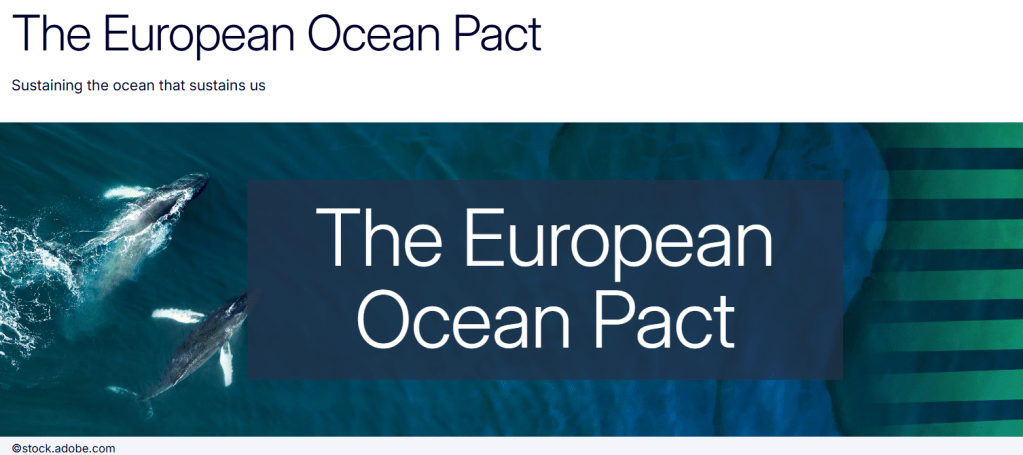
Starting big, the European Commission has adopted “Ocean Pact” in recognition how closely human and ocean welfare are related. The European Ocean Pact is a framework that brings together EU ocean policies and stakeholders, including fishers, innovators, scientists, investors, regions and civil society. Priority aims include the protection and resoration of ocean health, boosting sustainable blue economy, supporting coastal and island communities, enhancing maritime security, advancing ocean research and innovation and strengthen international ocean governance. Check out the Press Release for more detail. It sounds good, let’s hope it works!
In May 2025, the General Court of the European Union ruled that MPAs must be protected from destructive fishing practices, including bottom trawling, and no doubt this will form part of the Ocean Pact.
Next step, let’s move ocean conservation into the deep sea by ratifying the UN High Seas Treaty – at the moment, only 31 of the necessary 60 countries to enter it into international law have ratified, and there are only 3 days to go to the deadline (8 June 2025)!
Here in the UK, the Guardian newspaper reported on 5th June 2025 that MPs call for a ban on bottom trawling in Marine Protected Areas (MPA). There are 180 MPAs in the UK, covering nearly one million square kilometers of sea area and in spite of the name, fishing is still permitted. This includes the incredibly destructive practice of bottom trawling, recently put into sharp focus with David Attenborough’s film Ocean. Let’s hope soon the tide will turn on ocean destruction.
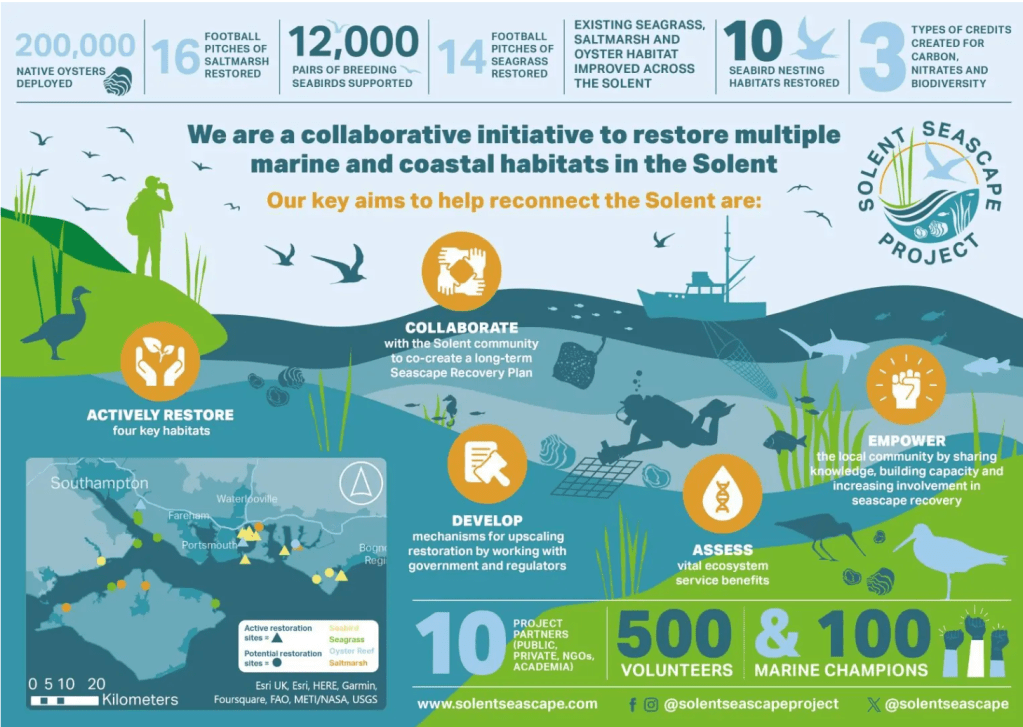
Let’s not overlook that positive action is being taken already at local scales. One example in the UK is the Solent Seascape Project: led by the conservation charity Blue Marine Foundation, and with partners that include the Environment Agency, Natural England and the University of Portsmouth, the 5-year project will restore the condition, scale and connectivity of oyster reefs, seagrass meadows, saltmarshes and seabird nesting habitat with the aim to create a resilient and biodiverse coastal system. With local communities and volunteers involved, the project will also improve knowledge and understanding and catalyse behavioural change.
No ocean blog is quite complete without a story about charismatic megafauna: the new footage of sperm whales diving to the seafloor to feed provided amazing new insights to the research community. What amazing creatures sperm whales are, enigmatic and fascinating and I am glad that they are back from the brink of extinction (although still classed as ‘vulnerable’ on the IUCN Red list of Threatened Species). Read more at Voice for the Blue and watch the video below.
We’ve all heard about the damaging effects of marine heat waves on corals, their bleaching and dying due to climate warming. In April 2024, the fourth global coral mass bleaching event occurred and by June of that year, 97% of the northern Great Barrier reef in Australia was declared as dead. While we wait for global carbon emissions to by dramatically reduced (by someone else?) to save the planet, scientists have glimpsed some hope from the discovery that some coral colonies are more heat tolerant than previously known. This could have important implications for the ability of coral reefs to adapt to higher seawater temperatures. The research can also inform conservation projects, whereby selective breeding of heat tolerant coral offspring may be used to improve reef restoration.

What do I take from this random collection of stories? The future of our oceans depends on everyone: politicians and international agreements, conservation NGOs and volunteers, government bodies and the entertainment industry, research and the media, you and me.
Think about what the ocean gives you: oxygen to breathe, beaches for BBQs, waves to ride, climate regulation, rockpools, transport of goods across the world, food to eat, sustainable energy, snorkelling grounds, wildlife, vast seascapes and unbelievable sunsets … too many ecosystem services to name them all here. So, give something back and seek out opportunities to protect our oceans through caring to learn more, ocean volunteering, citizen science projects or reducing single use plastics in your life – so many opportunities just waiting for your action!

 Challenging Habitat