

Plankton, fish, water, sand, sediment and bleach: 25 young people from Devon and Cornwall explore the marine system in a beautiful bay off Sark in the Channel Islands.
The sail training tall ship Pelican of London is our home for ten days for our annual Plymouth Ocean Science Voyage: 44 professional crew, volunteers, scientists, trainees and an “underwater robot” called Singer (because it looks like a sewing machine).
Leaving Plymouth, we sailed to the Channel Islands and anchored in the beautiful bay of St Peter Port on Guernsey for an exploration of the shoreline and town.
Rock pools and a sandy beach provided the ideal environment for comparing the physical conditions and organisms in the intertidal zone, the strip of land that is submersed at high water and exposed at ebb tide. In this dynamic environment, the temperature, salt content (salinity), temperature and alkalinity (pH) can change dramatically throughout a sunny day. The animals (e.g. snails, fish, shrimps, sponges and anemones) and plants (different seaweeds) are some of the most tolerant to wide ranging conditions in the marine environment.
After relaxing for a while in town, we returned to Pelican and made our way across to a beautiful anchorage in southwest Sark for the night. Our trainees, young people between 14 and 18 years of age, came up with project ideas for scientific study on the next day:
- Project Foodweb I: An exploration of the world of microscopic plankton, the tiny algae and animals that are at the base of the whole ocean food web, was undertaken to study the differences in populations at the surface and in deeper waters.
- Project Foodweb II: Filming the underwater world with a remotely operated vehicle (ROV or robot Alan), we studied fish populations in daylight and at night.
- Project Oceanography: How much change in water temperature and salinity occurs in coastal waters during a sunny day and tidal cycle? A CTD* instrument was deployed from the surface to the bottom waters (12 m) to answer this question.
- Project Bleach: Given that we disinfect surfaces on the ship with diluted bleach that is then dispatched into the surface ocean, we measured the change in water pH and toxic effects of cleaning solutions at different dilutions.
- Project sand: One group studied the composition of sand in detail to find out similarities and differences in appearance, texture, composition, salt content and microplastics between the low and high water line on the beach.
- Project sediment: What is the source of sediment in the bay? This question was investigated by studying the soils from the top of the cliffs, sand from the beach and sediment beneath the ship.


After a morning of collecting data and a refreshing swim, trainees analysed their results and prepared for their presentations of results, so we all learned something new about the marine ecosystem and its physical environment, as well as our impact upon it.
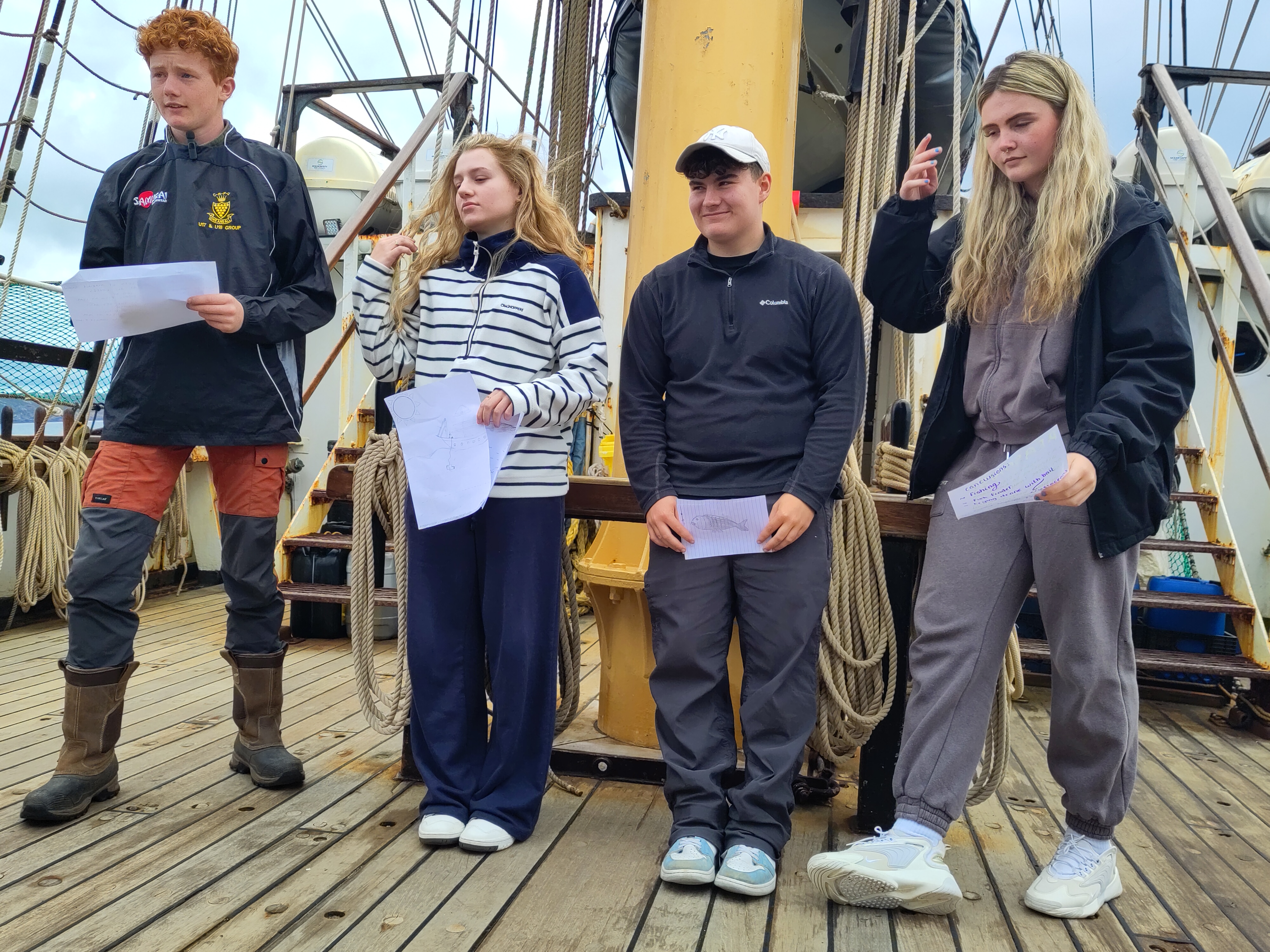


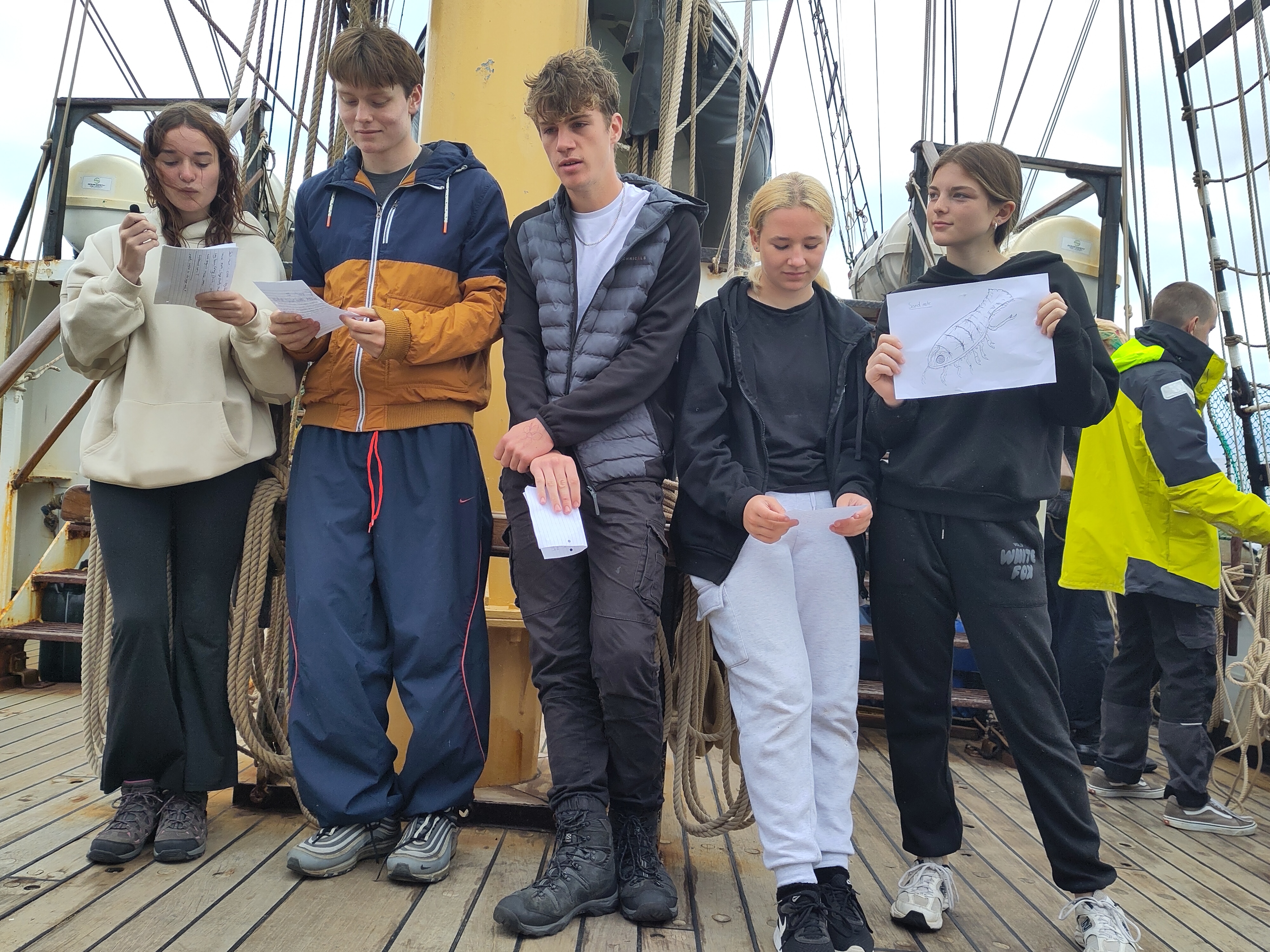
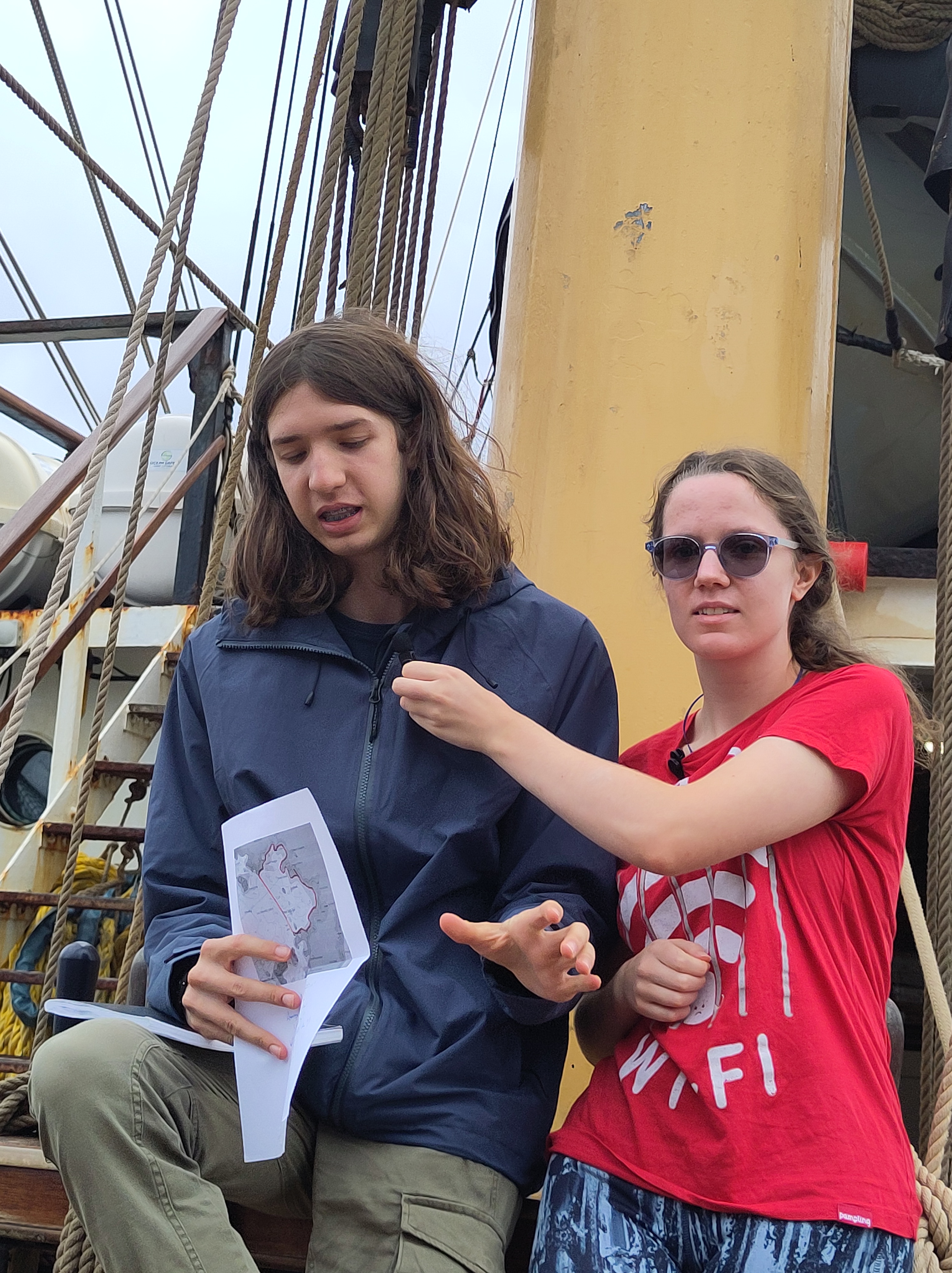


Some of our trainees presenting their findings on the welldeck of Pelican of London.
We were impressed by the standard of work and presentation skills, which included drawings of graphs and organisms.
All this is possible because we have generous sponsors who pay for trainees to come on board and have a unique experience and opportunities for personal development. You can become one of them by following the DONATE link on the Pelican of London website or contacting enquiries@pelicanoflondon.org for details.
*CTD stands for conductivity, temperature, depth, and the instrument conductivity, temperature, measures density and pressure from which salinity and depth are calculated.
Image credits: (c) C Braungardt 2024
 Challenging Habitat
Pingback: When Data Tell Stories | Challenging Habitat