
It is National Marine Week and the Wildlife Trusts invite everyone to a multitude of events and actions around the country and to Sea the Connection we have with the ocean. Personally, it is the mysterious deep that fascinates me most and this week, a deep sea discovery blew my scientific mind…
The global ocean currents connect all seas and, like a conveyor belt, transport heat, nutrients, gases and more between the surface ocean and the deep (see here). Perceived scientific wisdom had it that the oxygen required for life in the deep ocean was supplied from the surface by the global ocean currents.
But last week, Andrew Sweetman at the Scottish Association for Marine Science (SAMS) and 15 colleagues from around the world published new research in Nature Geoscience that upends this theory by showing that dark oxygen production takes place by seawater electrolysis at polymetallic nodules on the seafloor of the deep Pacific Ocean.
Let’s unscramble this a little:
- Oxygen is produced in the surface ocean by photosynthetic organisms, which use carbon dioxide dissolved in the water and the light energy from the sun to produce sugars that form the building blocks of their cells and the algae and bacteria involved in this process form the basis of most of the ocean food web.
- Oxygen is consumed in all parts of the ocean, for example by fish, crabs and other animals, and by a process called aerobic respiration that breaks down dead organic matter – for example, if a whale carcass sinks to the deep ocean sediment, animals and bacteria break it down and consume oxygen while they do that.
- Dark oxygen production is not carried out by photosynthesising living organisms, but chemically in the dark.
- In some areas of the deep ocean, metal-rich nodule deposits occur on the seafloor. These polymetallic nodules have been identified as potential resource for elements critical to modern life and energy transition (e.g. see here and here), but their mining is expected to impact deep sea ecosystems and the climate (e.g. see here and here).
- The results of this new study suggest that potato-sized polymetallic nodules are involved in seawater electrolysis, which splits water into oxygen and hydrogen with the differences in electric charge (potential) that exists between the different metal ions within the nodules. This dark oxygen production is big news, as oxygen production has been, so far, solely ascribed to organisms (see above).

What do we learn from this? This new discovery is ground-breaking and presents us with more questions than it answers. Perhaps most intriguing to many would be to revisit how life on Earth began and what role dark oxygen production may have played. However, for me even more fundamental is the question how the large-scale removal of polymetallic nodules through deep sea mining would impact on the oxygen balance of the deep ocean and the ocean’s capacity to continue as life sustaining system for all of us.

So if you have the time this week or next, go out and Sea the Connection with the ocean for yourself – and when you found it, share your thoughts on the National Marine Week interactive webmap.
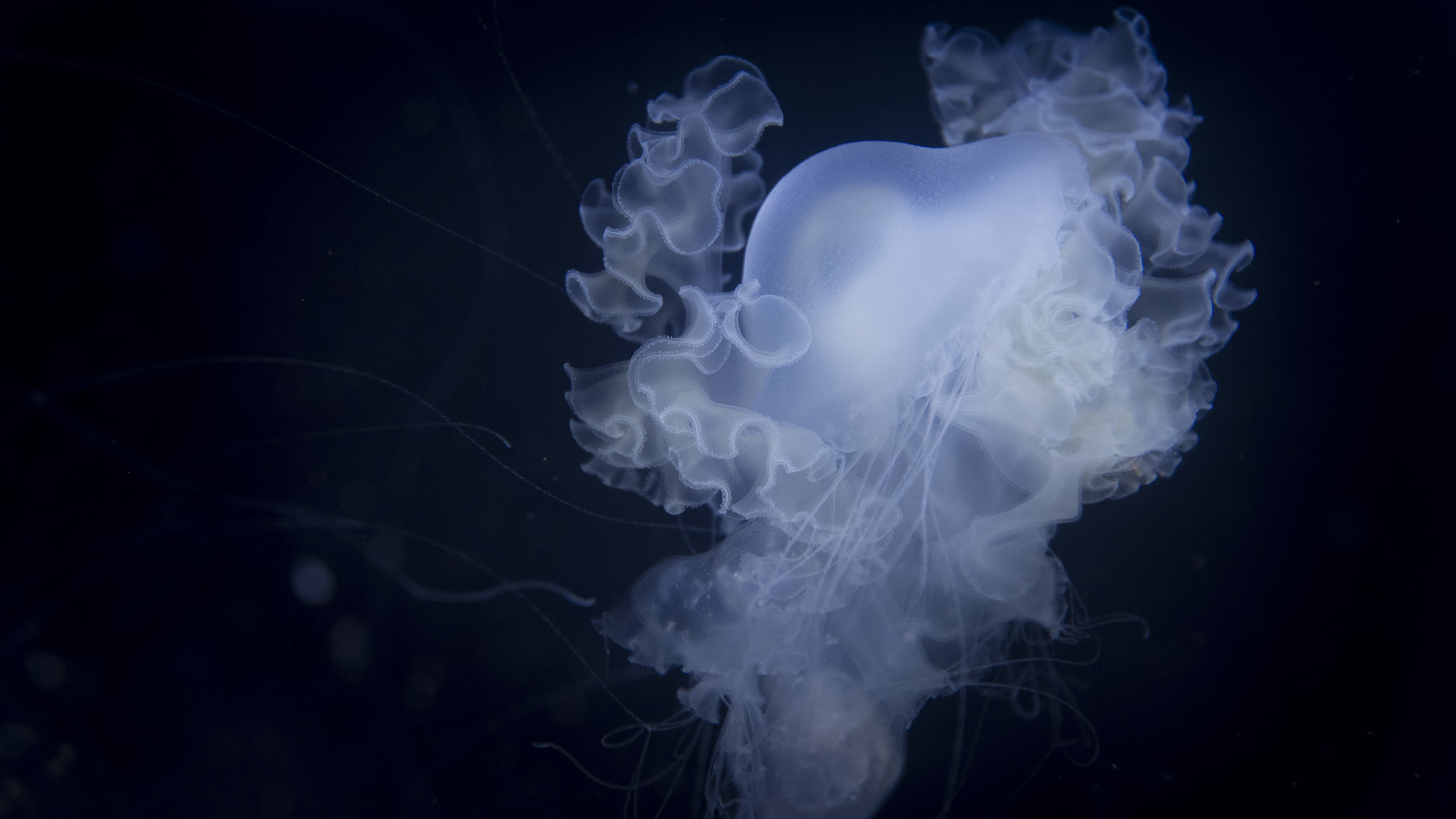
Featured Image: “Deep blue sea” by A.Cahlenstein Photography is licensed under CC BY 2.0.
 Challenging Habitat
Pingback: Over 4000 m Down | Challenging Habitat