
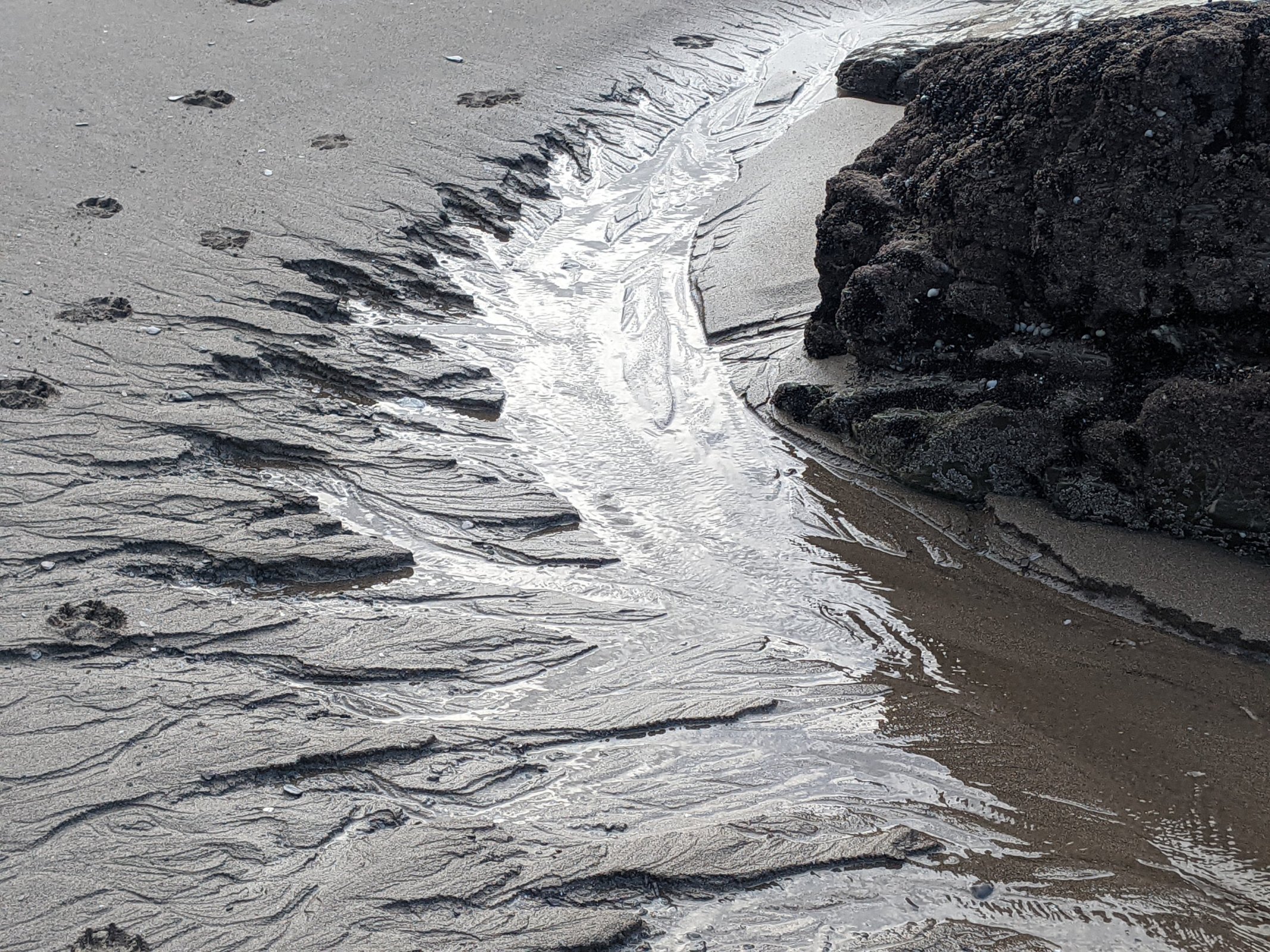
This year, British Science Week (6-15 March 2026) is all about curiosity. A wonderful theme because:
Curiosity is the essence of human existence – Gene Cernan (1934-2017)
I actually do believe that. Keep asking, keep wondering, keep exploring and you’ll continue to grow – not because you find all the answers, but because your mind remains open and active.
As a scientist, my work starts with a question that takes me from the what and how and why to researching and designing experiments that may lead me to knowing a little more about the subject and finding many more questions.
As a nature-lover, my queries often relate to the purpose of shape and colour, mode of propulsion and movement, properties of skin or surface, and all manner of other wonders of evolution and physical existence.
Questions don’t have to be difficult or deeply scientific to be interesting. As an example, take an observation made in Scotland last summer: we had young people from all over the world on board the sail training tall ship Pelican of London as part of the Gordenstoun International Summer School. We had just anchored off for the night among Scotland’s islands, and a really good question arose:
“What’s the sediment like?”
There were many reasons for being curious about the sediment, including its capacity to hold our anchor securely and wondering what lives beneath the ship and what habitat we will damage by dragging the anchor chain along the sea floor with changing tides and wind.
We had a way to find out: we lowered a simple Ekman Dredge, a kind of sediment grabber, over the side. When it reached the bottom, we sent a weight down the line to release the spring mechanism and close the sampler, grabbing a whole load of silty sediment.
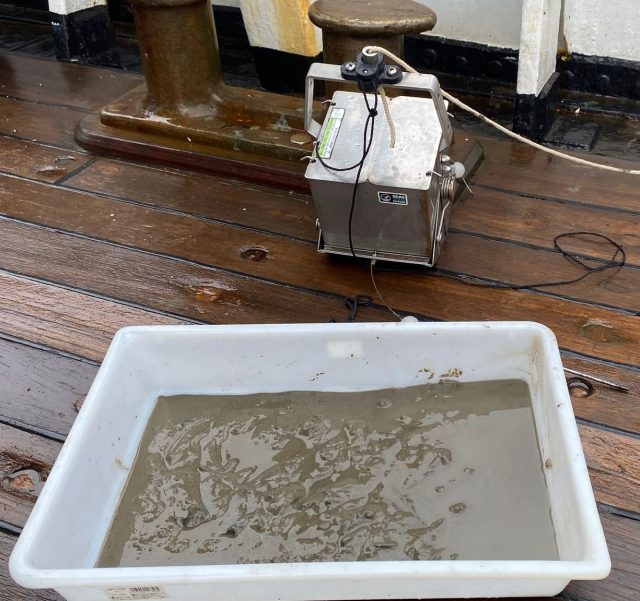
One of the ‘critters’ we found was a ‘hairy’ animal.
Once we isolated our new friend from the sediment and gave it some clean seawater, we watched it move across the tray using its arms. Identified as a probable featherstar, a quick check on the fabulous Marine Life Information Network (MarLIN) website of the Marine Biological Association confirmed that our ‘critter’ was most likely a rosy feather star (Antedon bifida).
More information satisfied our curiosity about how our rosy feather star lives: its central disc contains a mouth facing upwards and 25-30 claw-like cirri on the undersurface that allows it to hold on to rocks or seaweeds in strong currents. It can crawl using the cirri and ‘feet’ arranged in groups of three on the ‘feathers’ (pinnules) of each arm. It swims gracefully by moving its arms up and down. The feather star can live from shallow coastal waters to a depth of 450 m.
Keep diving a little deeper into the ‘rabbit hole’ of feather stars and you find fascinating videos about this group of animals by National Geographic and Deep Marine Scenes – well worth watching to get an idea about their diversity, graceful movement and who lives with them…
Go deeper still and you’ll find other fascinating facts about feather stars:
- they are members of the crinoid family, which were around some 300 million years before the dinosaurs
- their fossils tell geologists that the rocks they occur in were formed in a marine environment, for example limestones and shales
- crinoids can regenerate most parts of their body at amazing speed (1.5 mm per day)
- the bight pigments in some crinoids are toxic to fish, maing them unpallatable
- they have been on Earth for 500 million years, diverse in shape and beautiful
- ….
Where will your curiosity lead you?
Dr Colin Trier, a friend and former lecturer in Environmental Science at the University of Plymouth maintains that it is not important to have all the answers, but essential to keep asking the questions.
 Challenging Habitat