

What is the point of attending a conference? For me, it has always been about learning, challenging perceptions and meeting new people and catching up with aquaintances.
In the world of remote working, meeting face to face is a real treat and the Sail Training International Conference in Bordeaux (23-25 Jan 26) offered plenty of opportunities to do that and also showcase the work we do on Pelican of London.
We were made very welcome by the Bordeaux Metropole during an evening reception at the Musée Mer Marine de Bordeaux, which featured the first tastes of local wines, opportunities to get to know delegates and a mesmerising drone show.
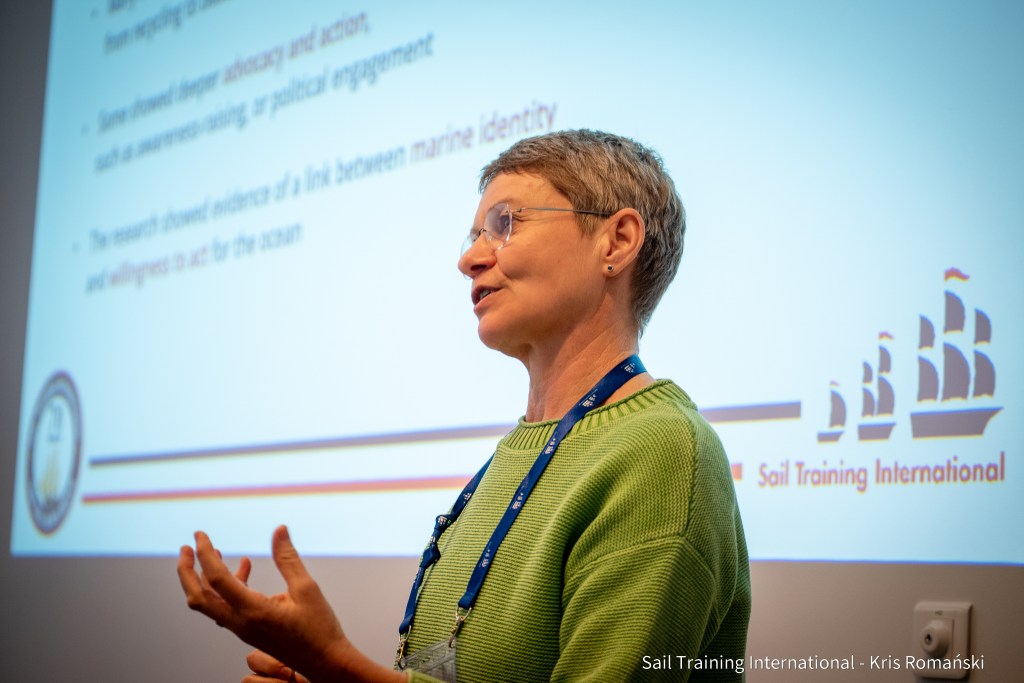
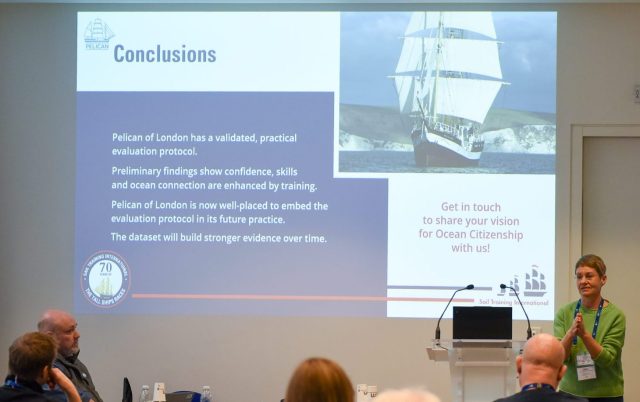
After the welcome reception set the scene on Friday morning, it was time for me to present the outcomes of a research project I’ve been leading during 2025. Sail Training International sponsored impact research of our ocean science education aboard the sail training tall ship Pelican of London with their Research Grant.
In the world of marine social science, Dr Pamela Buchan is a well-known and highly respected researcher, and complemented my the experience of integrating ocean science into sail training with her expertise around Ocean Literacy, Marine Identity and Marine Citizenship.
Together with outdoor adventure education specialist Dr Alun Morgan and Pelican’s (then) Marketing & Partnership Development Manager Yasmin Deter, we created a new Theory of Change around Pelican of London’s aims, mission and values. Based on this, we developed a new set of surveys that enables the assessment of short-term outcomes of sail training, as well as longitudinal impact studies.
My talk was well received and I am hopeful that the resources we developed are useful beyond Pelican of London: we are sharing it with the wider sail training community, who we invite to adapt and adopt and collaborate. Follow this LINK for full access to the study, reports and resources.
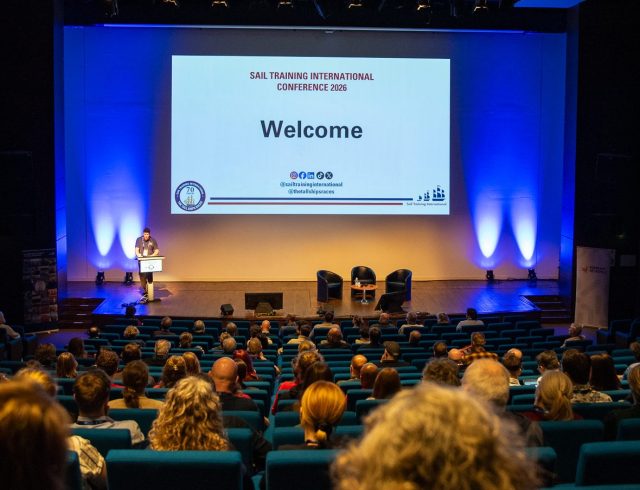
The conference ran three parallel sessions and there were plenty of interesting talks to learn from. My favourite were ‘Weather and Decision Making at Sea‘ and ‘Blue Skills, Green Minds: Environmental Science meets Sail Training‘. Particularly inspiring for me was Haakon Vatle‘s presentation on OneOcean, a sailing project seeking to ‘influence ocean protection through aligned, impactful communication‘.
Coffee breaks, lunches and the Conference Gala Dinner offered more networking opportunities and I was able to exchange thoughts with captains, crew and shore staff of Royalist, Draken Viking Ship, Stad Amsterdam, Bark Europa, Sail Training International, Sail Training Ireland, Aberdeen City Council, the Association of Sail Training Organisations and delegates from the STI Youth Council from around the world.
It is inspiring to find common ground and collaborative spirit in the name of maintaining sailing tradition, youth development and ocean protection.
 Challenging Habitat