

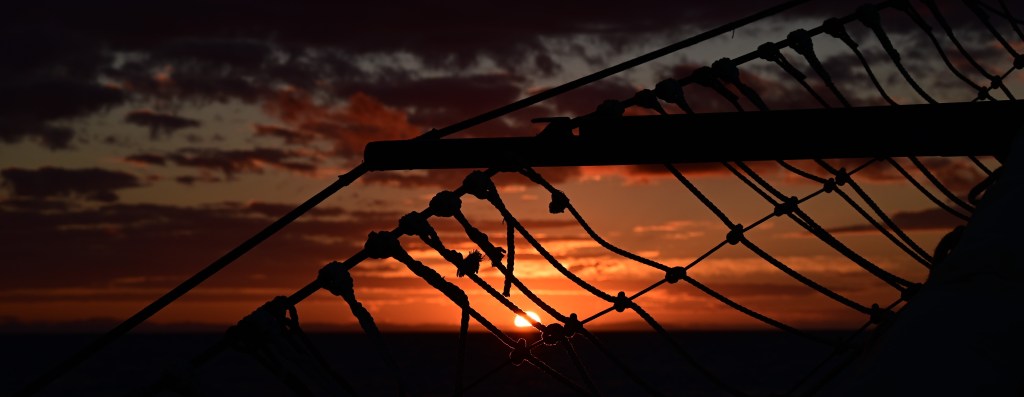
Imagine sailing across the ocean under a vast canopy of stars and dolphins weave through bioluminescent waters below. Such breathtaking moments are more than just beautiful – they are transformative.
A recently published academic paper presents preliminary research about the impact of Ocean Science Sail Training Voyages aboard the tall ship Pelican of London. These voyages were used as a case study, as they combine profound experiences of nature with hands-on learning and aim to inspire participants to connect deeply with the marine environment and become ocean advocates.
Stories told by some participants suggests that it is working:
- For one trainee, the sight of the Milky Way brought a profound sense of wonder. Reflecting on the universe’s immensity, they realised that there was no limit to their dreams, other than the glass ceiling they placed on themselves. Being inspired and empowered, they felt ready to discover life’s possibilities.
- Another trainee experienced a transformative moment at the helm. Steering the vessel, they felt a sense of purpose and responsibility. When dolphins appeared, leaping in the wake of the ship, a magical, joyful connection with nature and a feeling of belonging and harmony ensued.



Learning That Stays With You
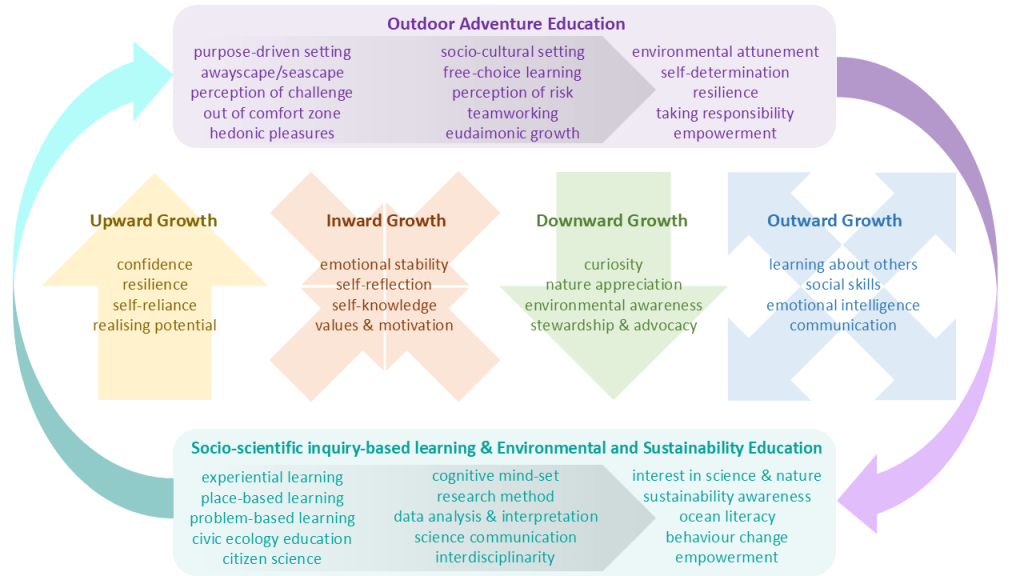
Pelican of London trainee feedback (2023 & 24) suggested that learning opportunities in four major categories of personal growth were experienced on board:
- upward growth (personal resilience and development)
- outward growth (social skills)
- inward growth (self-awareness)
- downward growth (environmental knowledge).
While previous studies have documented the positive effects of sail training on many elements of personal development, this research highlights the new dimension of hands-on environmental learning.
Ocean Science Sail Training Voyages focus on experiential, inquiry-based science education, helping participants develop critical skills and values related to marine conservation. By engaging directly with the ocean and its wildlife, trainees gain a deeper understanding of the ocean (eco)system. This approach makes learning tangible, memorable and impactful, especially for trainees who have not yet fulfilled their potential in formal educational settings.
These voyages combine emotional moments with active learning. For example, the thrill of watching dolphins is transformed as participants learn how to identify species and collect valuable data for conservation organisations as Citizen Scientists. Under the microscope, the secrets of the marine foodweb’s foundations are revealed, rocky shore explorations, shark egg case hunts and weather observations are as important as ocean acidification experiments and beach cleans to explore the marine environment and our impact upon it. Playfully, trainees learn the importance and practicalities of careful, consistent data collection in scientific investigations and the importance of valuing the different talents of team members.


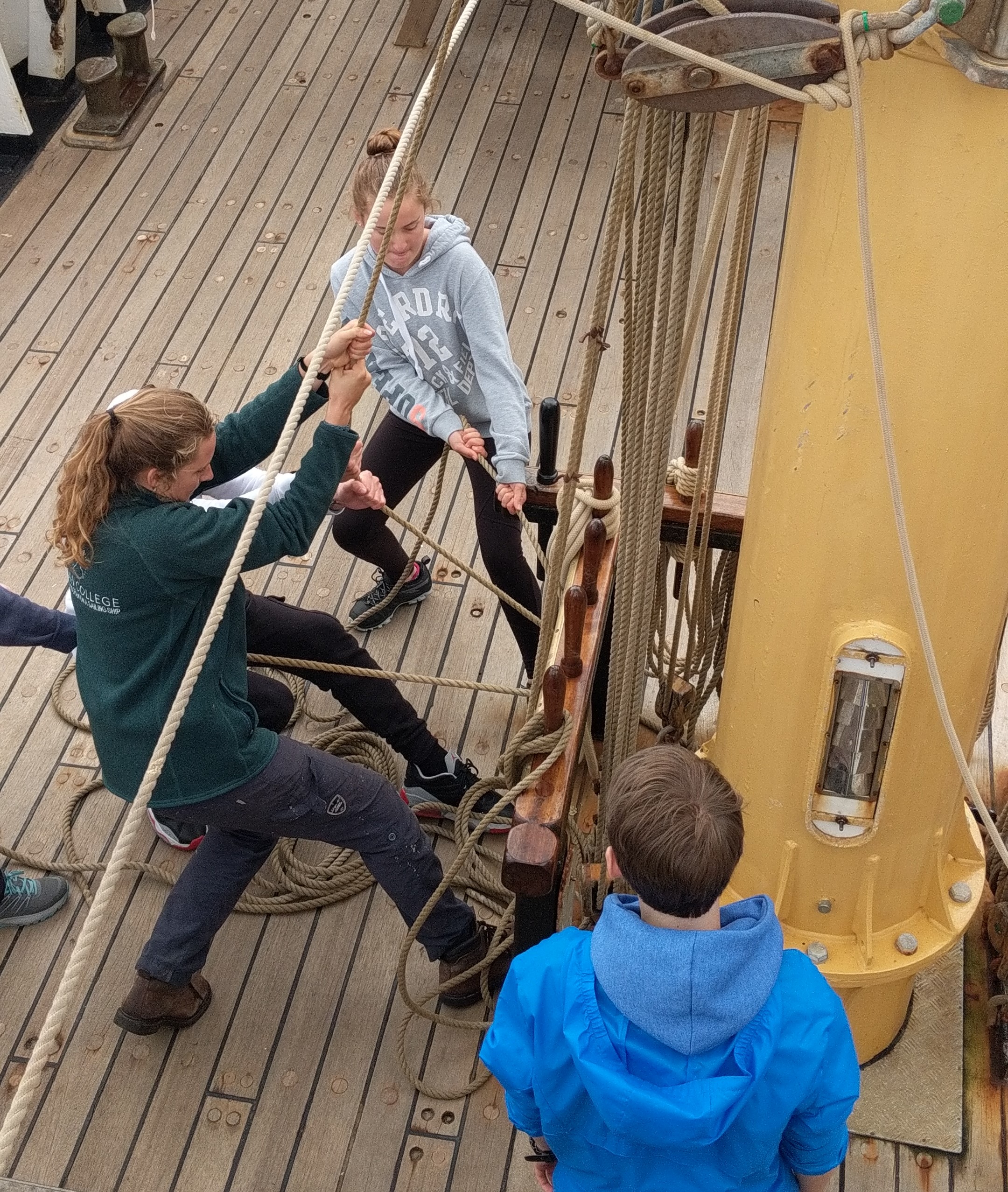

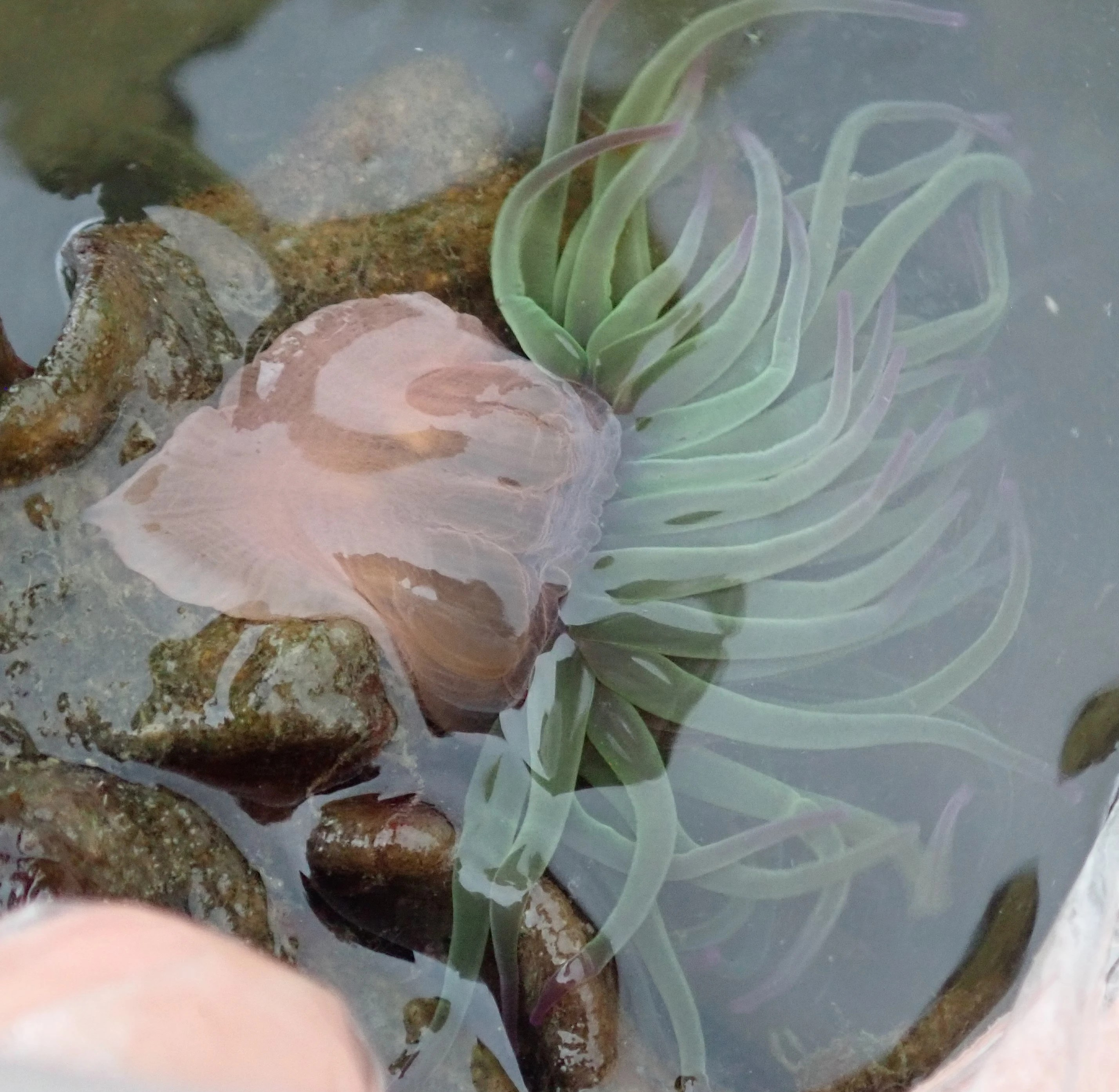
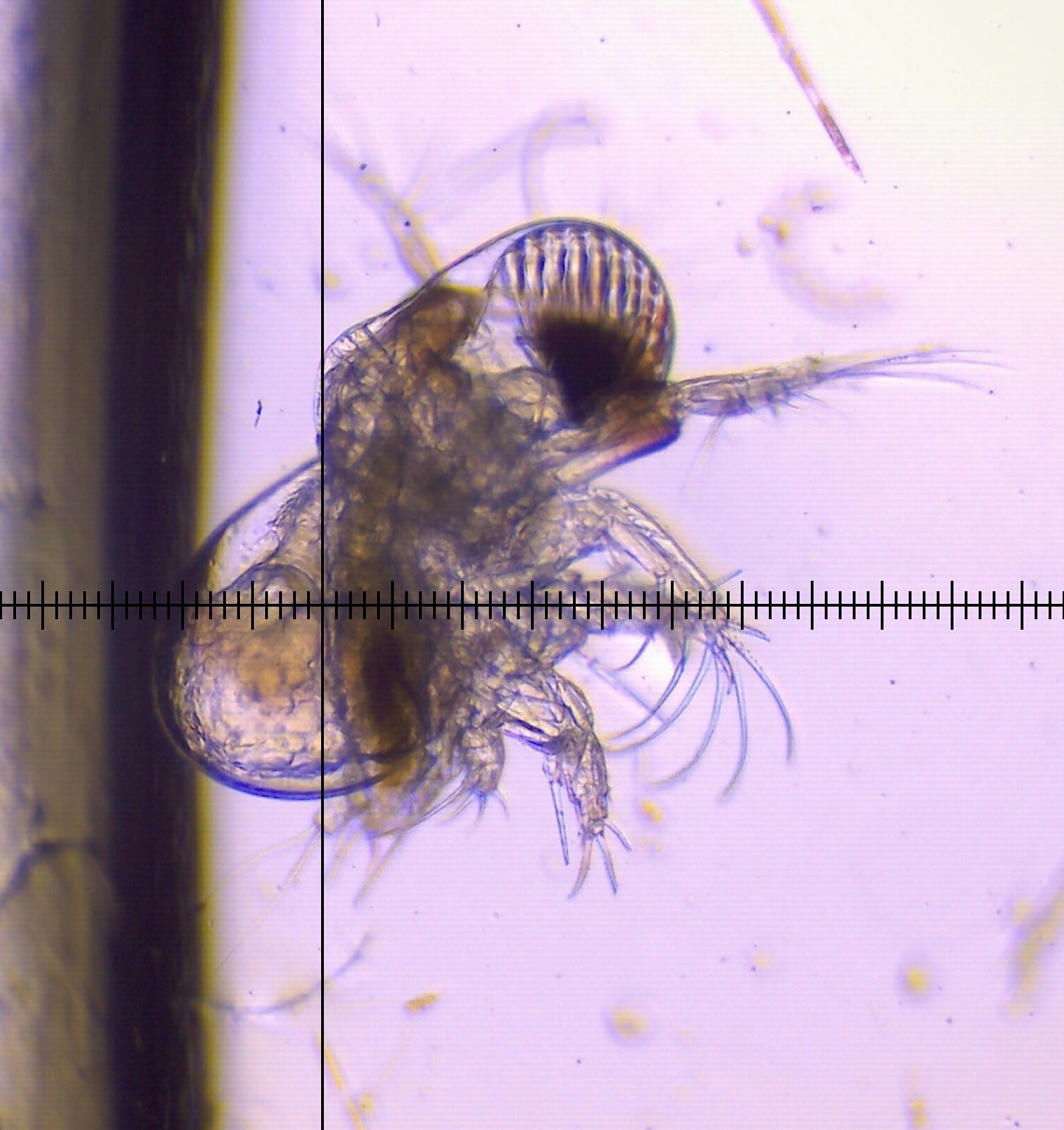

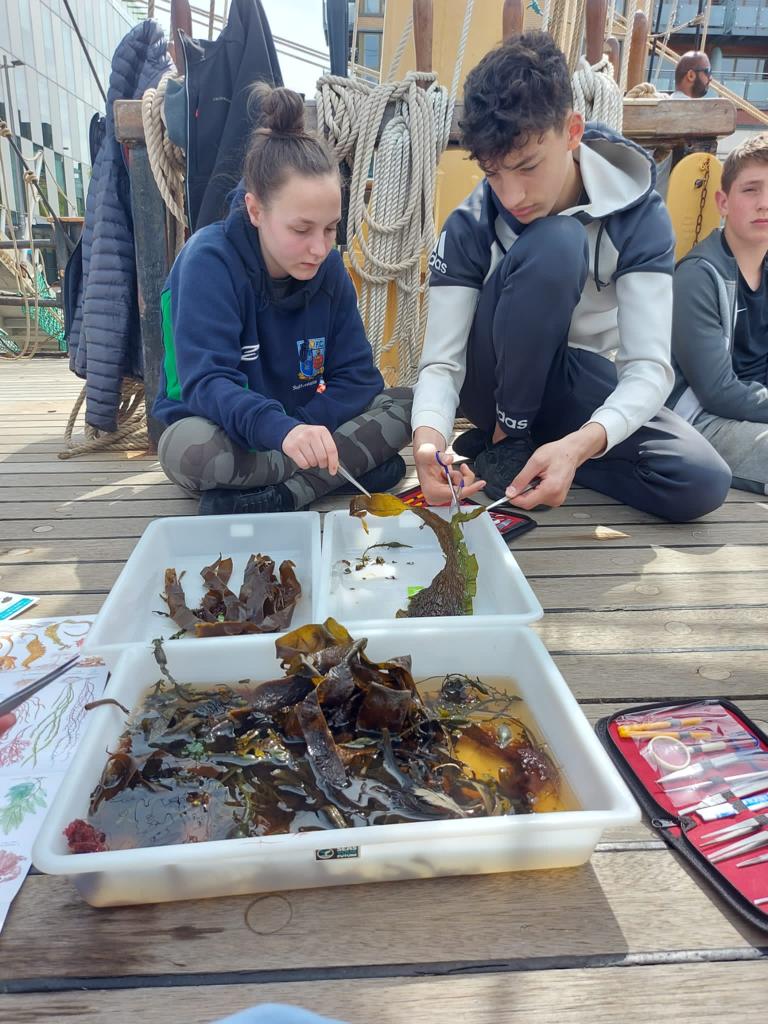


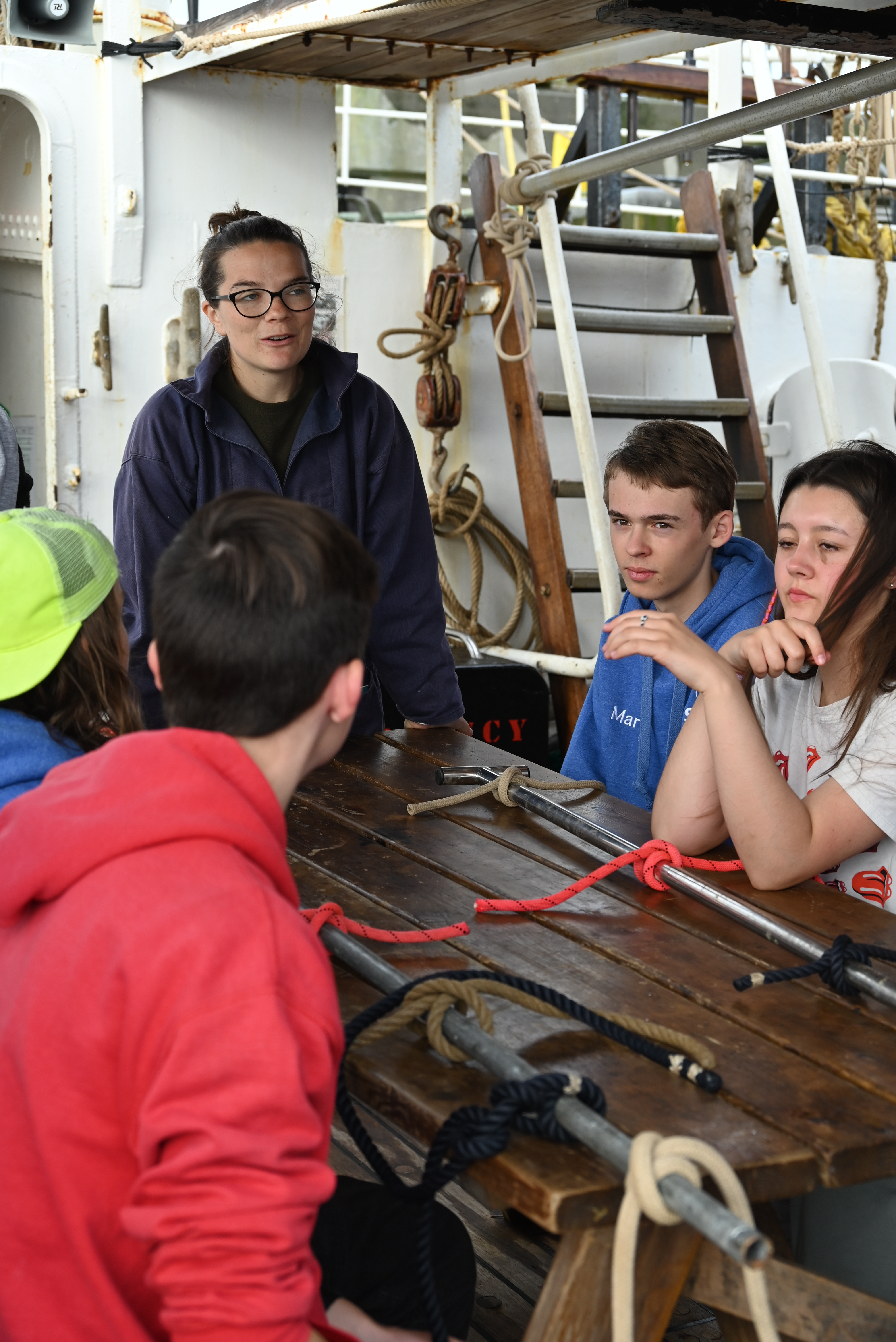
Blending awe and wonder with acquiring skills and understanding, the experiences on board foster environmental awareness, the development of a marine identity and in some, inspire real-world ocean advocacy and stewardship.
One trainee expressed their learning in this way: “I was able to understand how our actions have a detrimental effect on sea life, providing me with a deeper appreciation of the ocean’s fragile ecosystem…”.
A Microcosm of Sustainability
Life onboard a sail training ship offers valuable lessons far beyond the horizon. Being a valued ship-mate requires team spirit, resourcefulness, flexibility, teamwork, taking responsibility and self-sufficiency. With limited privacy and finite supplies of food, water, and fuel, trainees learn to make sustainable choices and adapt to shared spaces. These challenges develop resilience, community spirit and sustainable living practices that extend into everyday life.
Life on board provides full immersion in nature: the rhythm of the waves and the weather and skies in all their variations create a connection to the elemental forces of the world. Trainees often develop new perspectives on time, space, and themselves, leading to moments of self-reflection and growth. For some, these encounters feel transcendent and transformative.
To quote one trainee: “I genuinely can’t explain to you how much better I feel now. I feel so positive and joyful, which I haven’t felt since childhood.”

The Magic of Synergy
One of the most exciting findings of this study is the synergy between traditional sail training practices and marine science education. Both elements reinforce each other, creating a powerful cycle of growth and learning. Trainees report improved confidence, resilience, and social skills, alongside a deeper connection to the marine environment and signs of developing a desire for ocean conservation. These synergies are summarised in the figure below.
While these preliminary findings are promising, they also highlight the need for more research. How do these experiences shape participants over the long term? What are the broader impacts of combining personal growth with marine science education? Answering these questions could provide valuable insights for enhancing the training to unlock even greater potential for promoting positive human-ocean relationships.
Reference: Morgan, A., Braungardt, C.B. (2025) Setting Sail for Resilience and Ocean Sustainability. Ocean and Society, volume 2, article 9724. https://doi.org/10.17645/oas.9724
 Challenging Habitat
Pingback: Embracing the Challenge | Challenging Habitat