

Scientist in Residence Mauricio Ferreira spent several weeks on the sail training tall ship Pelican of London and involved teenagers in a plankton research project that compared biodiversity in coastal waters around the Irish Sea. With the right methodology, STEM education is an amazing tool to engage young people, and Mauricio hit the spot!
Mauricio combined a formal introduction to the concepts of biodiversity and the marine food web with the practical elements of the experiments that involved taking and analysing samples under the microscope. This in turn sparked more informal discussions about various aspects of the marine ecosystem and human interaction with it. You can read his report below:
At this point I’d like to say a massive THANK YOU to Mauricio!
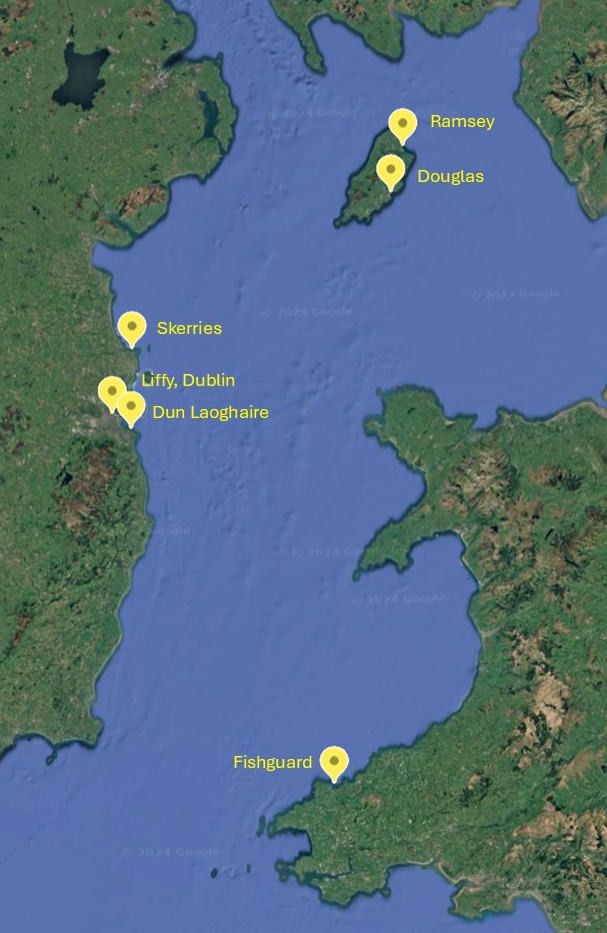
As an environmental scientist, I would want to consider some additional factors that may affect the biodiversity of plankton in coastal seas:
- Urban centres are potential sources of pollution from road runoff, effluent from sewage treatment works and industries. This may adversely affect the biodiversity of plankton, but also enhance the availability of nutrients. Either effect would be stronger near the urban centres of Dun Laoghaire and Dublin than near Fishguard, Ramsey, Douglas and Skerries.
- The river Liffy carries freshwater and freshwater plankton into the coastal mixing zone. As a result, organisms are exposed to a wide range of salinities, which will skew the population towards those that tolerate brackish conditions.
- Unicellular, microscopic algae (phytoplankton) require a steady supply of nutrients and relatively stable, quiet conditions to grow and multiply and are readily carried off by currents.
Given the considerations above, it may be less surprising that in samples taken at the Isle of Man coast, fewer (3-4) morpho-species1 of phytoplankton were identified than at Fishguard or the urbanised locations at the east coast of Ireland (6-7). Small planktonic animals and larvae (zooplankton) feed on phytoplankton and each other. Therefore, a greater diversity of phytoplankton will also enable a greater diversity of zooplankton to thrive. The 9-10 morpho-species of zooplankton identified in Dun Laoghaire, Dublin and Skerries appear to support this, while the results for Fishguard do not, which indicates that other influences beyond our investigation are at play. It is also important to consider that the species diversity in the Liffy at Dublin may be artificially enhanced by the presence of both, marine and freshwater species, even if not all of them were alive or thriving.
As with most scientific investigation, this small research project present more questions than it answers and this was the whole point: engender discussion and curiosity among trainees on board.
If you have been inspired by Mauricio’s experience on board and are interested to become one of our volunteer scientists for Pelican of London, please get in touch with me via charly@pelicanoflondon.org.
Featured Image: A sample of a bryozoa colony on a kelp frond is examined under the microscope on board Pelican of London. (c) C Braungardt 2022.
- ‘morpho-species’ identification considers the difference in the appearance (morphology) of organisms in a sample, rather than attempting to identify organisms at the species level. It is a useful tool in educational settings, where the aim is to acquire understanding of fundamental principles of ecology and facilitate discussion. ↩︎
 Challenging Habitat